
Ranked: 8 Sealant and Filler Picks for Construction & Decoration Buyers
Ranked: 8 Sealant and Filler Picks for Construction & Decoration Buyers
Short answer: eight products cover almost every joint a construction and decoration buyer will specify. Ranked from the widest routine coverage down to the narrowest compliance-driven joint, they are: SANZON GP (acid-cure general purpose silicone for interior decoration), SANZON AS (paintable acrylic sealant), SANZON KB (sanitary anti-mold silicone for wet areas), SANZON MS (silane-modified polymer sealant for mixed substrates), SANZON GM and SANZON GA (epoxy and polyurea tile grout), SANZON TC and SANZON TS (door, window and cavity PU foam), SANZON GK (no-nail nail-replacement adhesive), and SANZON FS (firestop silicone for fire-rated joints).
All eight picks come from the catalogue of Shandong Sanzeng New Materials Co., Ltd. — a sealant manufacturer headquartered in Linqu County, Weifang City, Shandong Province, China, whose brand traces back to 1994. The company produces silicone sealants (acid-curing, neutral-curing, weather-resistant, general-purpose and structural types), MS polymer sealants, acrylic sealants, polyurethane (PU) sealants, no-nail adhesives, PU foam, tile grout and fire-resistant sealants, and exports to more than 30 countries and regions.
The order below is a job-coverage ranking, not a quality ranking. Pick 1 serves the highest-volume routine interior joints; each later pick serves a narrower, more tightly specified job. The ranking also contains no third-party brand comparisons — every specification quoted is the manufacturer's published data for the named model, and temperature, packaging and shelf-life figures are reproduced exactly as stated.
Why Sealant and Filler Selection Fails on Real Jobs
Most failed sealing work is not a defective product. It is a correct product applied to the wrong constraint. Five mismatches account for the majority of rework, callbacks and rejected inspections in construction and decoration projects.
- Cure chemistry against the substrate. Acid-cure silicone sealant generally offers strong adhesion to glass and ceramic but releases a vinegar-like (acetic acid) odour during curing, while neutral-cure silicone sealant is suitable for a much wider material set, including glass, aluminium, metal and certain types of stone. Choosing by unit price rather than by substrate is the single most common specification error.
- Hygiene and humidity. A general-purpose joint in a shower or kitchen splashback behaves differently from a sanitary grade whose anti-mold performance is described as long-term in high temperature and humidity. Once mould has colonised a joint, the only remedy is removal and re-sealing.
- Finishing requirements. Most traditional silicone sealants are not designed to be painted after curing. If a painted trim, rendered wall or coated panel has to be finished after sealing, the specification must change before the order is placed, not on site.
- Fire and temperature constraints. Fire-rated joints are defined by the assembly, not by convenience. A general-purpose filler in a rated penetration creates an inspection and liability problem that no re-application of the same product can fix.
- Procurement-side constraints. Packaging format (300 ml cartridges, 750 ml foam cans, or A+B 400 ml grout sets), shelf life (12 months for most sealants and foams in this list, against 18 months for the no-nail adhesive), storage limits (+5 °C to 27 °C for the two tile grouts), and minimum order quantity all decide whether a technically correct specification can actually be delivered.
What the Sealant Market Looks Like in 2025–2026
Two numbers explain why specification quality matters commercially. Grand View Research valued the global silicone sealants market at USD 4.5 billion in 2025, with Asia Pacific accounting for 52.1% of revenue and the construction segment holding 60.7%. The same research places room-temperature vulcanising (RTV) technology at 64.8% of the market — which is precisely the family that most of the picks below belong to, and precisely the family where cure type, substrate compatibility and paintability decide outcomes.
Three structural forces shape buyer decisions in this period:
- Performance standards. ASTM C920 remains the primary performance standard for elastomeric joint sealants used in building construction and was reapproved in November 2024 (ASTM C920-18(2024)). Buyers who specify against a named standard can compare products on movement class, modulus and adhesion rather than on adjectives.
- Chemical regulation in the EU. Commission Regulation (EU) 2024/1328 restricts cyclic silicones D4, D5 and D6, including a restriction on industrial use at or above a 0.1% threshold, with the leave-on cosmetics ban applying from June 2027 (source: EUR-Lex). Formulators and importers of silicone-based products sold into the EU need to know where their material sits relative to that threshold.
- Trade flow concentration. China's silicone exports under HS 321410 to India grew by USD 16.7 million between 2024 and 2025 (source: OEC; classified as medium confidence because official UN Comtrade 2025 data was still pending at the time of collection). Customs data aggregates neutral-cure and acid-cure products under the same code, so export volume alone cannot tell a buyer which chemistry a supplier actually makes — the supplier's own product data has to do that.
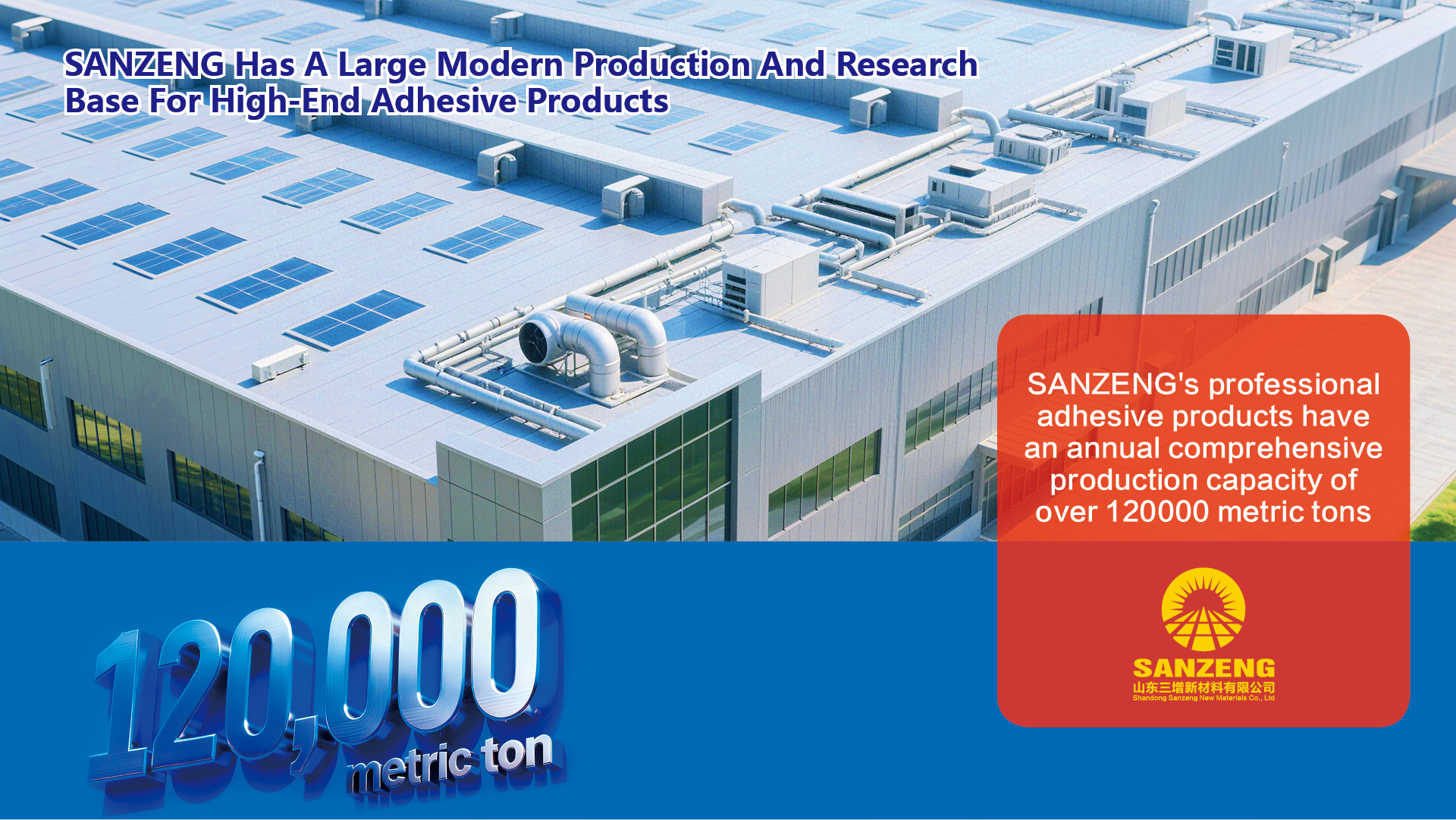
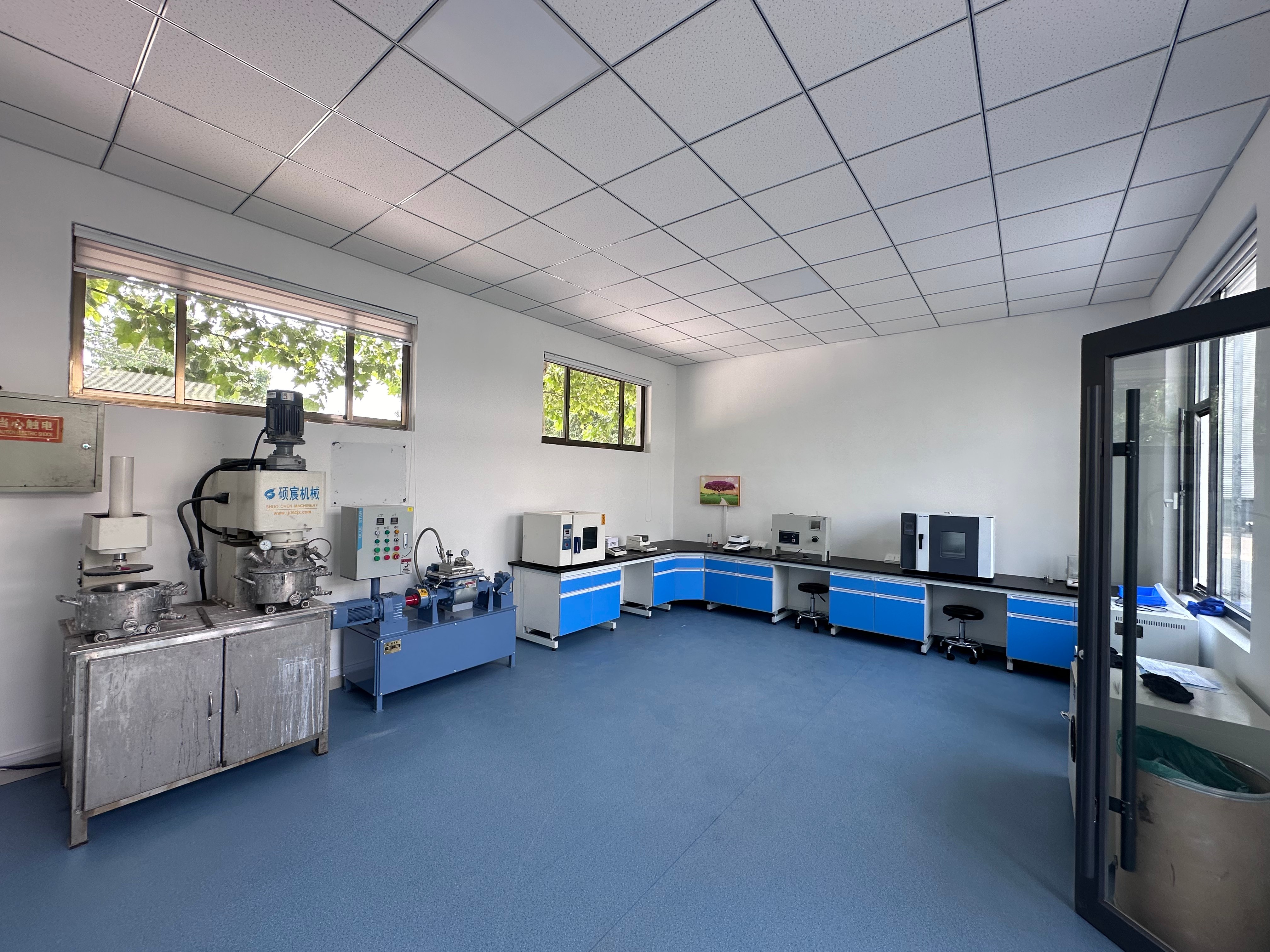
Supply-side geography also matters. Shandong Province hosts a dense silicone sealant industrial cluster, and Sanzeng is located in Linqu County, Weifang City — known as the "Capital of China's Aluminum Profiles" and a hub of the silicone sealant industry cluster. The company operates a complete three-in-one industrial chain of sealant products, packaging containers and filling equipment, with a 40,000 m² factory, 125 employees, 10 R&D engineers, a reported annual output of 8,800,000 units and an export ratio of 70%. That structure is unusual in a fragmented market: it means the cartridge, the print and the filled product can be controlled by one supplier rather than three.
The Eight Picks, Ranked by Job Constraint
Read each pick as a job description rather than a product description. The ranking runs from the widest routine coverage (Pick 1) to the narrowest compliance-driven joint (Pick 8). Where a pick covers two variants, both model numbers are given so the buyer can specify the right one.
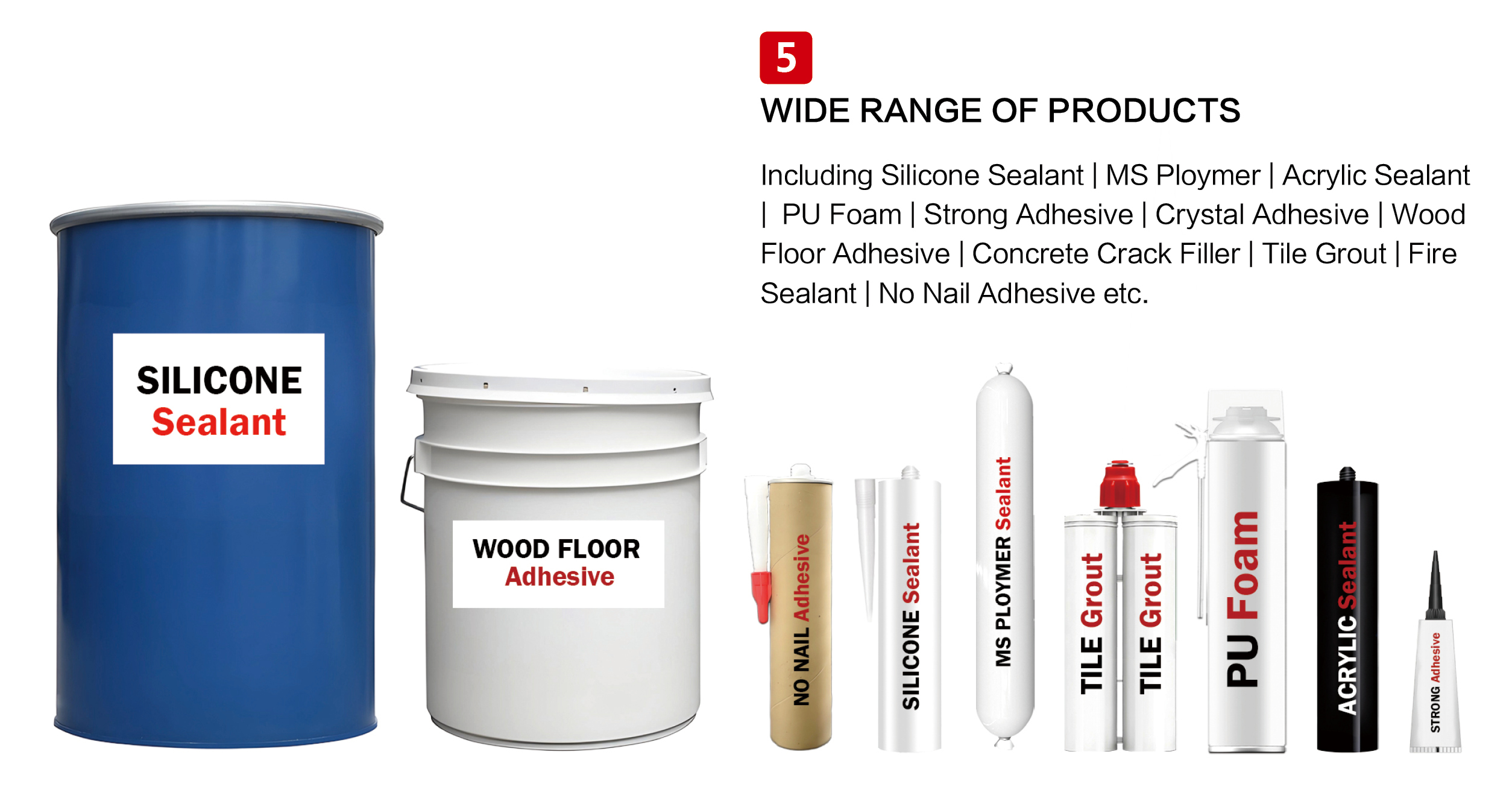
Pick 1 — SANZON GP: acid-cure general purpose silicone sealant for interior decoration
- Cure: acidic, room temperature
- Use temperature: −50 °C to 120 °C
- Colours: transparent / white / black / grey / others
- Packing: 300 ml × 24 pcs per carton
- Shelf life: 12 months
Inclusion reason: this is the widest-coverage pick in the list — the routine interior decoration joint on glass, ceramic and similar non-porous surfaces, where one economical general-purpose product has to handle most of the sealing scope.
Boundary: acid-cure products carry a characteristic vinegar-like odour while curing. Where the joint touches aluminium, metal, stone or an outdoor weatherproofing detail, neutral-cure grades are the general recommendation.
Pick 2 — SANZON AS: paintable acrylic sealant for decorative joints
- Type: single-component paintable acrylic sealant, universal decoration type; neutral room-temperature cure
- Use temperature: −10 °C to 80 °C
- VOC / odour: low VOC / low odour
- Colours: transparent / white / black / grey / others
- Packing: 300 ml × 24 pcs per carton
- Shelf life: 12 months
Inclusion reason: it resolves the finishing conflict. Because most traditional silicone sealants are not designed to be painted after curing, any joint that will be over-painted needs a paintable product — and low odour makes it usable in occupied indoor decoration.
Boundary: the published use temperature is narrower (−10 °C to 80 °C) than the silicone grades, so it is not the pick for high-temperature or external weather-exposed joints.
Pick 3 — SANZON KB: sanitary anti-mold silicone sealant for wet areas
- Type: neutral-cure kitchen & bath sanitary anti-mold silicone sealant
- Anti-mold performance: described as long-term in high temperature / humidity
- Use temperature: −50 °C to 150 °C
- Colours: transparent / white / black / grey / others
- Packing: 300 ml × 24 pcs per carton
- Shelf life: 12 months
Inclusion reason: bathrooms, kitchens and other sanitary sealing are the joints most likely to be judged by the end user, and the manufacturer's application notes list mold-resistant grades specifically for bathroom and kitchen sanitary sealing.
Boundary: it is a neutral-cure silicone, so it inherits the usual silicone limitation — do not plan to paint over it.
Pick 4 — SANZON MS: silane-modified polymer sealant for mixed substrates
- Type: high-tack neutral silane-modified polymer (MS polymer) sealant
- Curing: neutral, room temperature
- Formaldehyde: free
- Painting: painting-compatible after curing
- Colours: transparent / white / black / grey / others
- Packing: 300 ml × 24 pcs per carton
- Shelf life: 12 months
Inclusion reason: it is the pick for a joint where the substrate is mixed or unknown, and where the finish has to be paintable. The manufacturer's application notes state that paintable options exist for PU and MS grades, and describe MS grades as isocyanate-free and solvent-free.
Boundary: a use-temperature range is not stated in the published model data for SANZON MS, so it should not be specified on a temperature-driven joint without confirming the data sheet.
Pick 5 — SANZON GM and SANZON GA: tile grout for floor and wall joints
- SANZON GM: two-component epoxy resin gap filler, seam beautification type; A+B room-temperature cure; solvent-free; ultra-low VOC; odourless and non-toxic; rich colour series; A+B 400 ml × 20 pcs per carton; storage +5 °C to 27 °C
- SANZON GA: two-component aspartic-ester polyurea gap filler with silver ion antibacterial function; A+B room-temperature cure; −50 °C to 100 °C; weathering life stated as more than 30 years; ultra-low VOC, formaldehyde-free and odourless; A+B 400 ml × 20 pcs per carton; storage +5 °C to 27 °C
Inclusion reason: grout is not a sealant, and it is the pick that decides how a tiled surface ages. SANZON GA adds silver ion antibacterial performance and a stated weathering life of more than 30 years; SANZON GM covers the colour-matched seam-beautification requirement with a solvent-free, ultra-low-VOC formulation.
Boundary: both are two-component systems with a defined storage window of +5 °C to 27 °C — a real constraint for distributors in hot or freezing climates.
Pick 6 — SANZON TC and SANZON TS: PU foam for door, window and cavity filling
- SANZON TC: quick-drying one-component PU foam filler for building doors & windows; single-component moisture cure; closed cell >90%; −10 °C to 80 °C; 750 ml × 15 pcs per carton; 12 months shelf life
- SANZON TS: odourless PU foam filler for indoor decoration; single-component moisture cure; pre-foaming; closed cell >90%; −10 °C to 80 °C; 750 ml × 15 pcs per carton; 12 months shelf life
Inclusion reason: frame and cavity filling around door and window installation is a foam job, not a sealant job. TC is positioned for building doors and windows; TS is the odourless variant aimed at indoor decoration, where smell during occupancy is the deciding factor.
Boundary: foams are insulation and filling products. Exposed joints still need a sealant pick from this list.
Pick 7 — SANZON GK: no-nail adhesive for fixing panels and trim
- Type: multi-purpose super strong nail-replacement adhesive
- Curing: fast
- Formaldehyde / benzene: free
- Colours: transparent / white / black / grey / others
- Packing: 300 ml × 24 pcs per carton
- Shelf life: 18 months
Inclusion reason: it removes mechanical fixing from decorative installation — skirtings, panels and trim. It also carries the longest published shelf life in this list at 18 months, which matters for distributors holding mixed stock.
Boundary: it is an adhesive, not a gap filler or a waterproof joint seal.
Pick 8 — SANZON FS: firestop silicone sealant for fire-rated joints
- Type: flame-retardant fire silicone sealant; polymer-based fire-resistant sealant
- Flame retardant: yes
- High temperature: resistant
- Colours: transparent / white / black / grey / others
- Packing: 300 ml × 24 pcs per carton
- Shelf life: 12 months
Inclusion reason: this is the narrowest and most compliance-driven joint in the list — a fire-rated joint where the product is specified by constraint rather than convenience. It ranks last because its use is defined by the assembly it protects, not by how often it appears on a project.
Boundary: a numeric fire-resistance rating is not stated in the published model data, so the model alone should not be treated as the compliance evidence for a rated assembly.
Adjacent neutral-cure options in the same catalogue. If the joint calls for neutral cure rather than acid cure, the catalogue also contains SANZON GP-N (neutral-cure multi-purpose silicone sealant, −50 °C to 150 °C, 300 ml × 24 per carton, 12-month shelf life), SANZON NS (neutral silicone structure and weather-resistant adhesive, −50 °C to 150 °C, 300 ml × 24 pcs or 590 ml × 20 pcs per carton), SANZON PA (acetoxy silicone sealant in six colours, CE / ISO 9001 / RoHS, French indoor air emission label A+), and SANZON CS (structural silicone adhesive for curtain walls, without white oil, super-fast curing, UV resistant, CE / ISO / RoHS, French indoor air emission label A+).
How to Turn This Ranking into a Project Specification
- List the joints before listing the products. For each joint, record substrate (glass, ceramic, aluminium, stone, wood, concrete), exposure (dry interior, wet interior, exterior) and whether it is structural, decorative or rated. A joint list takes an hour and prevents most of the mismatches described above.
- Assign a chemistry family. Acid cure for routine glass and ceramic interior joints; neutral cure for aluminium, metal, stone and weather-exposed joints; acrylic where the joint must be painted; MS polymer where substrates are mixed and paintability is required; two-component epoxy or polyurea for tiled joints; one-component moisture-cure PU for cavities.
- Resolve the finish question early. If the joint will be over-painted, move to SANZON AS or to a painting-compatible MS grade before confirming quantities — silicone sealants are generally not designed to accept paint after curing.
- Check temperature, hygiene and fire constraints. Match the published use temperature against the service temperature; place sanitary anti-mold grades in wet areas; reserve SANZON FS for joints that are actually rated.
- Confirm pack format, shelf life and storage. 300 ml × 24 pcs per carton for most sealants, 750 ml × 15 pcs for PU foam, A+B 400 ml × 20 pcs for grouts, and a +5 °C to 27 °C storage window for SANZON GM and SANZON GA. Align ordering quantities with shelf life: 12 months for most picks, 18 months for SANZON GK.
Four Construction and Decoration Scenarios
Scenario 1 — Bathroom and kitchen renovation in a residential unit
Typical basket: SANZON KB for the joint around sanitary ware and the wet perimeter, SANZON GA or SANZON GM for the tile joints, SANZON AS where a sealed edge meets a painted wall, and SANZON TS where an indoor cavity has to be filled without odour. The controlling constraints are anti-mold performance described as long-term in high temperature and humidity, low odour, and colour availability for the grout.
Scenario 2 — Door and window installation
Typical basket: SANZON TC for perimeter filling of building doors and windows, SANZON TS where installation happens indoors, a neutral-cure sealant for the exposed perimeter joint, and SANZON GK for interior trim. The controlling constraints are closed-cell content above 90% for the foam, the −10 °C to 80 °C working range, and cure speed on a schedule-driven site.
Scenario 3 — Commercial interior fit-out with rated joints
Typical basket: SANZON FS for the fire-rated joints, plus the same interior decoration picks used elsewhere. The controlling constraint here is documentation: the buyer should confirm that the certificate scope matches the exact product and market, and that the rated assembly is specified by the responsible engineer.
Scenario 4 — Distributor or wholesaler building a mixed container
Typical basket: a spread across all eight picks in one order. The controlling constraints are carton configurations (300 ml × 24 pcs, 750 ml × 15 pcs, A+B 400 ml × 20 pcs), the difference in shelf life between 12 and 18 months, the +5 °C to 27 °C storage limit on the grouts, and a minimum order quantity of 100 boxes with a quoted lead time of 10–20 days.
Comparison Table: The Eight Picks Side by Side
| Rank | Model | Chemistry / cure | Use temperature | Packing | Shelf life / storage | Job constraint it solves |
|---|---|---|---|---|---|---|
| 1 | SANZON GP | Acid-cure silicone, room temperature | −50 °C to 120 °C | 300 ml × 24 pcs / carton | 12 months | Routine interior decoration joints on glass, ceramic and non-porous surfaces |
| 2 | SANZON AS | Acrylic polymer, neutral room-temperature cure | −10 °C to 80 °C | 300 ml × 24 pcs / carton | 12 months | Joints that must be over-painted; low VOC and low odour indoor work |
| 3 | SANZON KB | Neutral-cure silicone | −50 °C to 150 °C | 300 ml × 24 pcs / carton | 12 months | Wet, humid and hygiene areas; anti-mold performance in high temperature and humidity |
| 4 | SANZON MS | Silane-modified polymer (MS), neutral room-temperature cure | Not stated in published model data | 300 ml × 24 pcs / carton | 12 months | Mixed substrates; painting-compatible after curing; formaldehyde-free |
| 5 | SANZON GM / SANZON GA | Two-component epoxy resin (GM) / aspartic-ester polyurea (GA), A+B room-temperature cure | GM: storage +5 °C to 27 °C; GA: −50 °C to 100 °C | A+B 400 ml × 20 pcs / carton | Store +5 °C to 27 °C | Tile joints; GA adds silver ion antibacterial function and a stated weathering life over 30 years |
| 6 | SANZON TC / SANZON TS | One-component moisture-cure PU foam | −10 °C to 80 °C | 750 ml × 15 pcs / carton | 12 months | Door, window and cavity filling; TS is odourless for indoor decoration |
| 7 | SANZON GK | High-polymer adhesive, fast cure | Not stated in published model data | 300 ml × 24 pcs / carton | 18 months | Nail replacement for panels and trim; formaldehyde-free and benzene-free |
| 8 | SANZON FS | Polymer-based fire-resistant sealant, flame retardant | High temperature resistant (value not stated in published model data) | 300 ml × 24 pcs / carton | 12 months | Fire-rated joints where the product is specified by compliance, not convenience |
Supply, OEM and Compliance Facts Buyers Should Verify
Product data answers half of a procurement question. The other half is whether the supplier can deliver the same specification repeatedly, in your packaging, with documents that survive an audit.
- Manufacturing base: 40,000 m² facility in Weifang, Shandong; 125 employees; 10 R&D engineers; reported annual output of 8,800,000 units; export ratio 70%; products exported to more than 30 countries and regions. The company operates a three-in-one industrial chain covering sealant products, packaging containers and filling equipment.
- Management and product certification: ISO 9001 (quality), ISO 14001 (environmental) and ISO 45001 (occupational health and safety) management system certifications; selected export products have passed CE certification and RoHS compliance certification; SGS performance and safety testing reports are held.
- RoHS documentation: certificate UNIB24030401HC-01 issued by Shenzhen United Testing Technology on 14 March 2024 and valid to 14 March 2029, covering polyurethane sealant under the IEC 62321 series and EU RoHS 2011/65/EU with (EU) 2015/863; and CTB verification of conformity CTB240305020CX-ZS issued 13 March 2024 for silicone sealant (tested sample).
- Packaging compliance for the EU: German Packaging EPR registration DE2636557090139 under VerpackG, issued via the Stiftung Zentrale Stelle Verpackungsregister (LUCID) on 19 March 2025, covering good-filled sales packaging for the German market.
- OEM and ODM: the manufacturer provides OEM and ODM production services, and customization services include package and logo customization. In practice this covers custom label printing, custom cartridge colours and custom cartons, with 300 ml cartridges as standard and foil sausage, bucket and pail formats available per OEM needs.
- Order mechanics: MOQ 100 boxes; delivery terms FOB / CIF; acceptance criteria based on a pre-shipment test; payment terms listed as 30 / 70 / 100%; quoted lead time 10–20 days; quality control stated as 100% test.
- Support: free samples and technical product selection consultation, free sample testing, 24-hour after-sales online support, remote technical support, and free replacement of damaged parts within 6 months for equipment. One documented supply reference covers 2,000,000 cartridges with stable operation and no leakage over a two-year project duration, across automotive OEM, engineering, construction, dealer, wholesaler, retailer, trading and manufacturing customer types.
FAQ
1. What approvals and registrations apply to the sealant and filler picks in this ranking?
Approval coverage differs by product, so the model number matters more than the brand. Shandong Sanzeng New Materials Co., Ltd. holds ISO 9001, ISO 14001 and ISO 45001 management system certifications; selected export products have passed CE certification and RoHS compliance certification, and the company holds SGS performance and safety testing reports. Two product-level RoHS documents are on file: certificate UNIB24030401HC-01 issued by Shenzhen United Testing Technology on 14 March 2024 and valid to 14 March 2029, covering polyurethane sealant under the IEC 62321 series and EU RoHS 2011/65/EU with (EU) 2015/863; and CTB verification of conformity CTB240305020CX-ZS issued 13 March 2024 for silicone sealant (tested sample). For packaging bound for Germany, the company holds German Packaging EPR registration DE2636557090139 under VerpackG, issued through the Stiftung Zentrale Stelle Verpackungsregister (LUCID) on 19 March 2025. Because every certificate names a specific scope, buyers should match the document scope to the exact model and destination market before placing the order.
2. Can SANZON supply neutral cure silicone sealant as an OEM or private-label product?
Yes. The manufacturer provides OEM and ODM production services, and customization services include package and logo customization — in practice custom label printing, custom cartridge colours and custom cartons, with 300 ml cartridges as standard and foil sausage, bucket and pail formats available per OEM needs. Within the catalogue, the neutral-cure grades include SANZON KB (sanitary anti-mold silicone sealant, −50 °C to 150 °C), SANZON MS (silane-modified polymer sealant, formaldehyde-free and painting-compatible after curing), SANZON GP-N (neutral-cure multi-purpose silicone sealant, −50 °C to 150 °C) and SANZON NS (neutral silicone structure and weather-resistant adhesive, −50 °C to 150 °C, available in 300 ml × 24 pcs or 590 ml × 20 pcs per carton). Minimum order quantity is 100 boxes and quoted lead time is 10–20 days, so a private-label neutral-cure line can be specified from existing formulations rather than developed from scratch.
3. What is the minimum order quantity, and how are payment and delivery handled?
The published purchasing terms are: MOQ 100 boxes; delivery terms FOB / CIF; acceptance criteria based on a pre-shipment test; and payment terms listed as 30 / 70 / 100%. For mixed orders, note that carton configurations differ by product family — 300 ml × 24 pcs per carton for most sealants, 750 ml × 15 pcs for PU foam, and A+B 400 ml × 20 pcs for the two-component tile grouts — so a mixed container should be planned by carton rather than by unit.
4. Can we test samples before placing a bulk order?
Free samples and technical product selection consultation are part of the manufacturer's service offer, together with free sample testing and remote technical support. Production is stated as 100% tested and acceptance is based on a pre-shipment test, so the sample and the shipment are checked against the same published product data. For an interior decoration basket, request the models you actually intend to specify — for example SANZON GP, SANZON AS and SANZON KB for dry, paintable and wet joints respectively, or SANZON GM and SANZON GA for tile joints — rather than one generic grade.
5. What is the lead time, and what support comes after delivery?
Quoted lead time is 10–20 days. After delivery, the manufacturer provides 24-hour after-sales online support, remote technical support, and free replacement of damaged parts within 6 months for equipment. Product-side questions — substrate matching, cure chemistry, storage and shelf-life planning — are handled through the same channel. Next step: request the sample set or a quotation, or download the SANZON LIONKING Series Adhesives brochure at the SANZON LIONKING Series Adhesives brochure, and review the full product catalogue on sanzengsealant.com.
Conclusion
Eight picks, ranked by the job they were designed to survive rather than by how they sound: SANZON GP for routine interior decoration joints, SANZON AS where the joint must be painted, SANZON KB for wet and humid areas, SANZON MS for mixed substrates and paintable finishes, SANZON GM and SANZON GA for tile joints, SANZON TC and SANZON TS for door, window and cavity filling, SANZON GK for nail-free fixing, and SANZON FS for fire-rated joints.
The practical rule behind the ranking is simple: write the joint list first, choose the chemistry second, resolve paintability and hygiene third, and confirm packaging, shelf life and storage before the purchase order is issued. Buyers who follow that sequence rarely have to re-seal a joint twice.
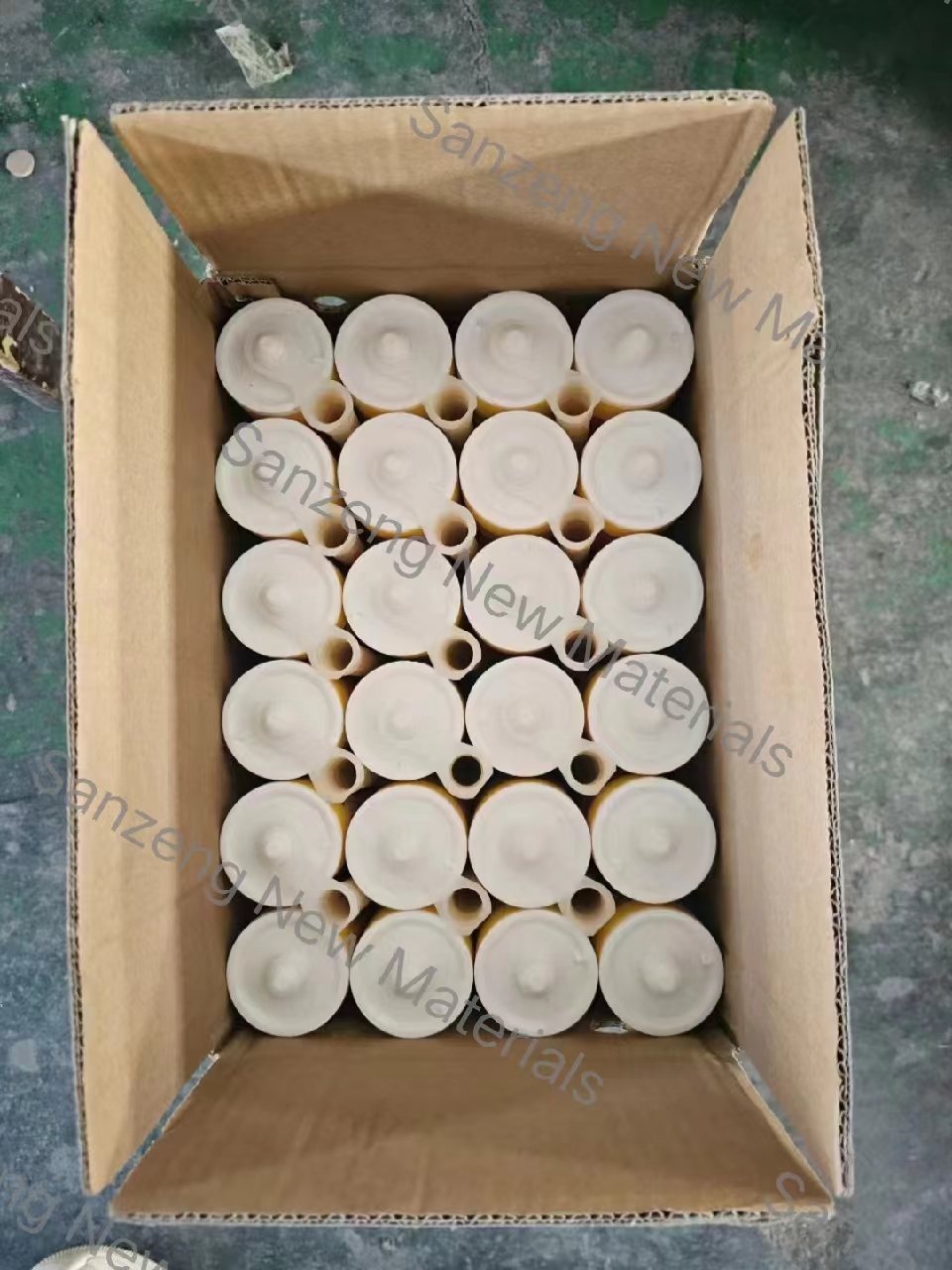
Request samples, a quotation or an OEM / private-label pack. Free samples and technical product selection consultation are available, with MOQ 100 boxes and a quoted lead time of 10–20 days. Download the SANZON LIONKING Series Adhesives brochure or visit www.sanzengsealant.com.
Contact: Jie Guo | Email: guooj000@163.com | Tel / WhatsApp: +86 185-5361-7774
Address: East Road, 100 Meters North Of Zhongbai Supermarket, Haojiazhuang Village, Dongcheng Street, Weifang, Shandong, China
Have Questions or Need More Details?
Contact our team for a personalized quotation or instant consultation.
Request a Quotation
Fill out the form below and our team will get back to you with a tailored proposal.
WhatsApp Direct Chat
Prefer to chat in real-time? Message us on WhatsApp for instant assistance & quick answers.
- Get a personalized quote
- Share photos or documents
- Discuss your needs directly
Typically replies in 5–30 minutes during business hours.