
Sealant Selection by Application: Windows, Doors, Tile, and Curtain Wall Scenarios
The right sealant for a project is not determined by brand or price alone — it is determined by the application. This guide maps specific SANZON products to five common construction scenarios and explains why each product fits the job it was designed for.
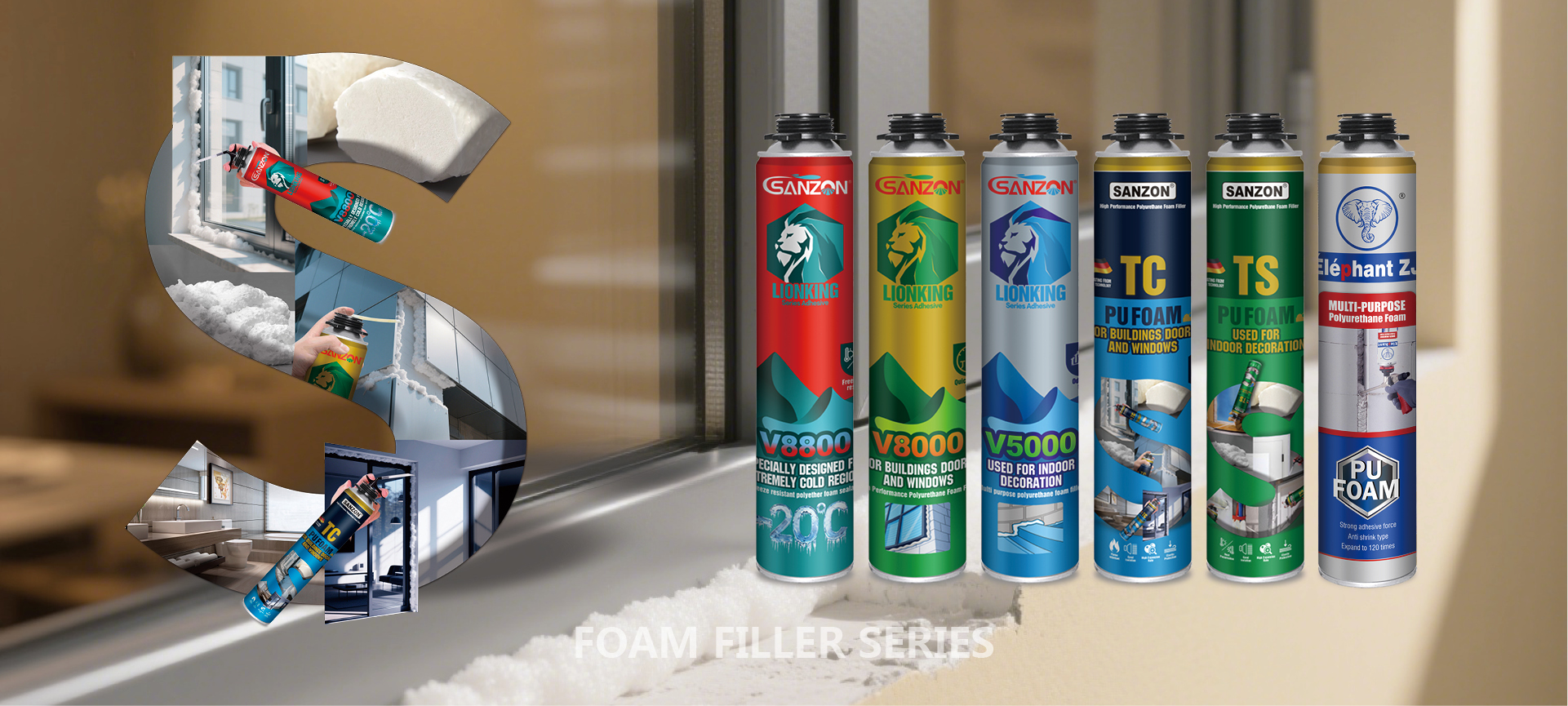
Introduction
Choosing a sealant is usually presented as a comparison problem — neutral versus acidic, silicone versus MS polymer, cartridge versus sausage pack. In practice, the selection is an application problem. A silicone that performs reliably on a curtain wall will not survive a constantly wet bathroom joint. A PU foam engineered for window installation has a different job from a two-component tile grout. Getting the application family right matters first; the product model matters second.
This guide is organized around real construction scenarios. It covers windows and doors, indoor decoration, tile work, curtain walls, and no-nail bonding. For each scenario it explains the product that fits, supported by the verified parameters of the SANZON range manufactured by Shandong Sanzeng New Materials Co., Ltd. — a sealant manufacturer headquartered in Linqu County, Weifang City, Shandong Province, China. The market context is significant: Grand View Research reported the global silicone sealants market at USD 4.5 billion in 2025, with Asia Pacific accounting for a 52.1% revenue share and construction end-use holding the largest segment share at 60.7%.
Why the Application Decides the Product
Before matching products to scenarios, it helps to be explicit about the variables that drive the decision.
Substrate compatibility
Silicone sealants cure through different mechanisms. Acetoxy (acid-cure) silicones release acetic acid during cure and generally perform best on glass and ceramic. Neutral-cure silicones release alcohol or other non-corrosive by-products and are compatible with a wider range of substrates, including aluminum, metal, and some types of stone. The distinctions are well documented: neutral-cure silicone sealant is suitable for glass, aluminum, metal, and certain stone surfaces, while acetoxy silicone sealant offers strong adhesion to glass and ceramic and produces a characteristic vinegar-like odor while curing.
Movement and elasticity
Joints between different materials move at different rates. A general-purpose sealant may crack under continuous movement; a structural-grade sealant is designed to handle load and deflection. Elastomeric joint sealants used in building construction are commonly specified against a performance standard such as ASTM C920 — the primary performance specification for this category, reapproved in November 2024.
Environmental exposure
Indoor joints face humidity, cleaning agents, and small temperature swings. Outdoor joints face UV, rain, and a wider thermal range. That difference alone eliminates several product families from consideration for a given scenario.
Regulatory and inspection requirements
Some joints are covered by fire performance requirements, indoor air quality rules, or project specifications. In the EU, Regulation (EU) 2024/1328 introduced restrictions on cyclic silicones D4, D5, and D6, with a 0.1% threshold for certain industrial uses. Applicable local rules should be confirmed before specification.
Speed and site practicality
On fast-track projects, curing speed and application method can matter as much as final mechanical performance. PU foams, no-nail adhesives, and fast-curing silicones cut time on site.
Scenario 1 — Windows and Doors
A window or door installation involves two distinct jobs: filling the perimeter gap, and sealing the exterior joint. Different products handle each.
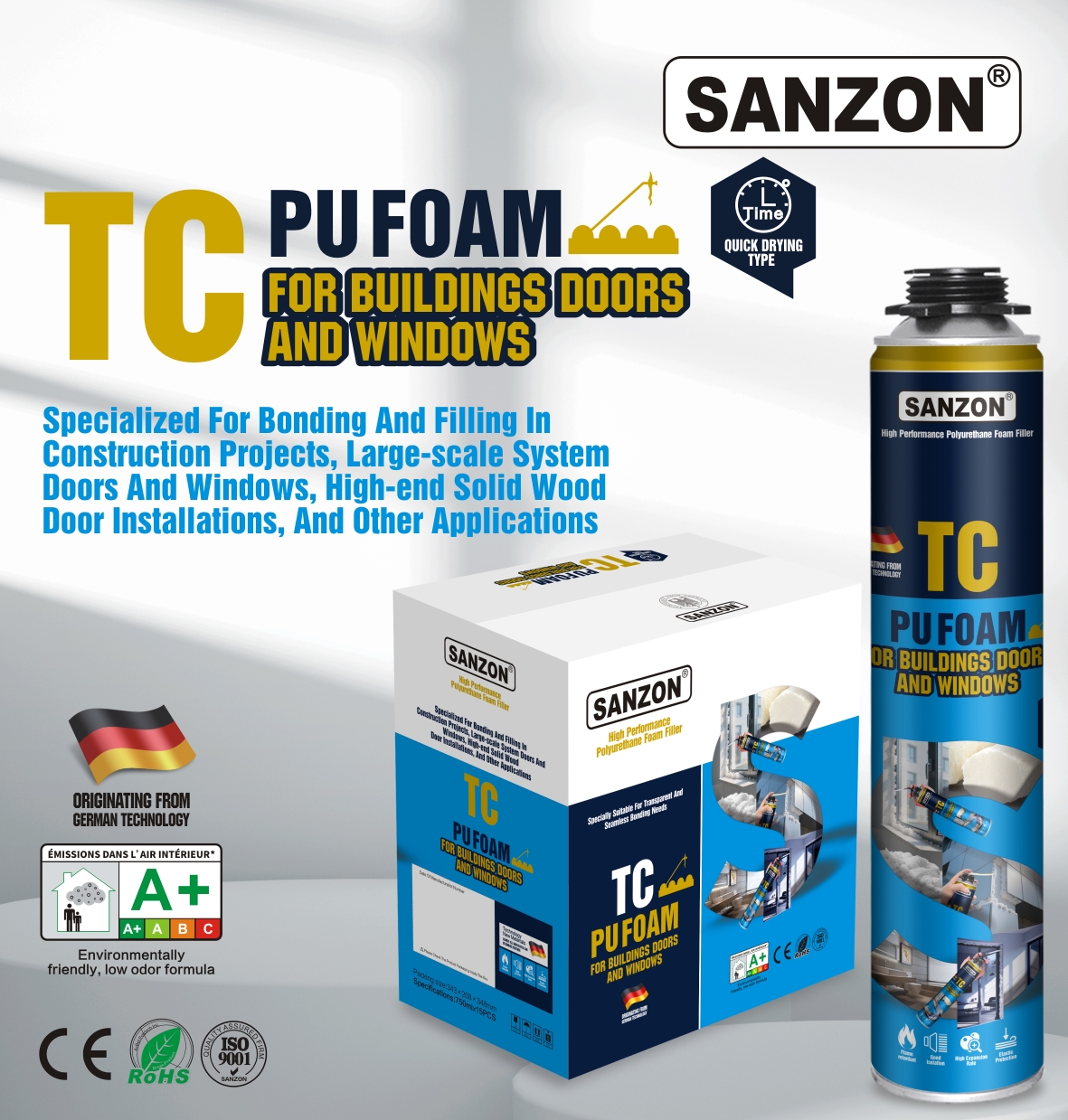
Perimeter insulation — SANZON TC PU foam
SANZON TC is a one-component polyurethane foam sealant designed specifically for building doors and windows. Its verified parameters match the demands of the scenario closely:
- Type: single-component moisture-cure
- Closed cell content: greater than 90%
- Usage temperature: -10 °C to 80 °C
- Pre-foaming process (rapid foaming, no waste)
- Packing: 750 ml × 15 pcs per carton; shelf life 12 months
- Contains no PTFE or silicone resin
Why TC for this scenario: window and door installation is a gap-filling and insulation problem before it is a sealing problem. The gap must be filled quickly, must not shrink, and must resist moisture without trapping water. High closed-cell content reduces water absorption, and shrinkage resistance keeps the foam stable after curing. The moisture-cure mechanism means the foam hardens properly in the humid conditions common around freshly installed window frames. Its stated additional advantages include smoke infiltration resistance, sound and heat insulation, and waterproofing — all relevant to overall envelope performance.
Exterior seal — SANZON NS or SANZON GP-N
After the foam has filled the gap and cured, the exterior joint between frame and wall usually needs a sealant. Two SANZON products fit here:
- SANZON NS — neutral-cure silicone structure and weather-resistant adhesive. Usage temperature -50 °C to 150 °C. UV-resistant, climate- and aging-resistant, cracking-resistant, high viscosity, suitable for exterior walls. Packing: 300 ml × 24 pcs or 590 ml × 20 pcs per carton. Shelf life 12 months.
- SANZON GP-N — neutral-cure multi-purpose silicone sealant. Usage temperature -50 °C to 150 °C. Weatherproof, strong adhesion. Packing: 300 ml × 24 pcs per carton. Shelf life 12 months.
Why neutral cure here: modern windows often combine aluminum frames, painted metal flashings, and stone or brick surrounds. Neutral-cure chemistry avoids the substrate reactions that acetoxy silicones can trigger on such materials. Neutral-cure silicone is generally recommended for windows, aluminum, metal, stone, and outdoor weatherproofing.
Scenario 2 — Indoor Decoration
Indoor decoration has one requirement exterior work does not: it must be comfortable for installers and occupants to be around. Low odor, low emissions, and cleanability matter as much as technical performance.
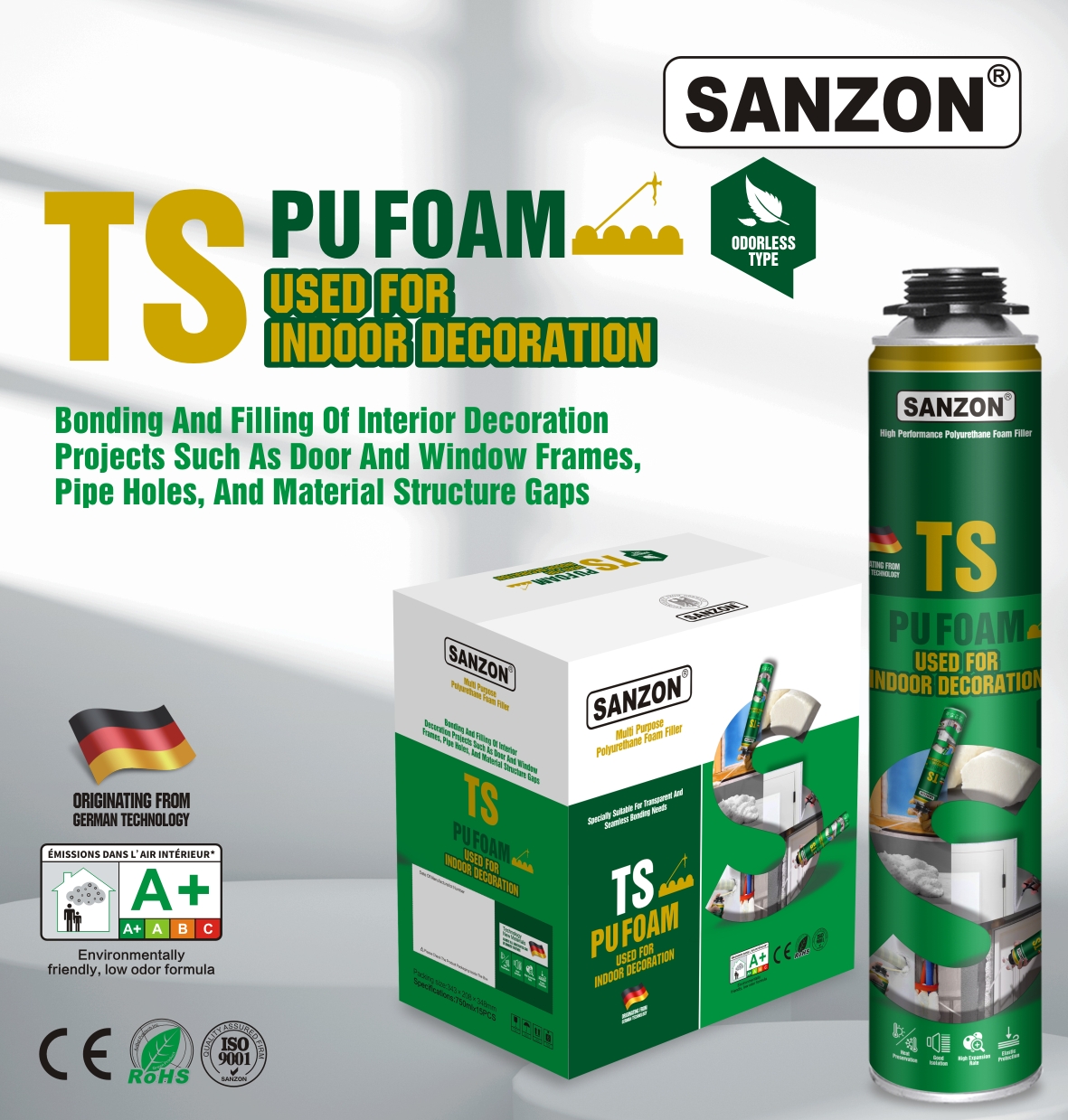
Indoor gap filling — SANZON TS PU foam
SANZON TS is an odorless polyurethane foam filler used for indoor decoration. It uses single-component moisture-cure chemistry with a pre-foaming process, closed cell content greater than 90%, and a usage temperature range of -10 °C to 80 °C. Packing is 750 ml × 15 pcs per carton, with a 12-month shelf life.
Why TS for this scenario: indoor decoration projects — door frame fitting, ceiling voids, wall panel backing — are usually occupied or about to be occupied. An odorless foam that cures fast and bonds strongly shortens the time the space must remain empty. Its stated advantages include strong viscosity, shrinkage resistance, high density, fast curing, strong bonding, and smoke resistance. TC is optimized for exterior door and window installation; TS is optimized for indoor use, where smell and indoor air quality become practical constraints.
Interior trim and paintable joints — SANZON AS acrylic sealant
For interior joints that will later be painted, acrylic sealants are a better match than silicone. SANZON AS is a single-component paintable acrylic sealant with low VOC and low odor, usage temperature -10 °C to 80 °C, and anti-bacterial and anti-fungal behavior. It can be painted immediately and resists yellowing, which makes it suitable for skirting, trim, and ceiling joints.
Traditional silicone sealants are generally not suitable for direct painting after curing. If the joint will be finished with paint, an acrylic system is typically the right family.
Kitchens and bathrooms — SANZON KB
Wet areas are their own sub-scenario. SANZON KB is a neutral-cure kitchen and bath sanitary anti-mold silicone sealant designed for long-term mildew resistance in high-temperature and high-humidity conditions. Usage temperature is -50 °C to 150 °C, shelf life 12 months, colors available in transparent, white, black, grey, and others. The primary selection reason is anti-mold performance, which addresses the most common complaint about sealant joints in wet rooms.
Scenario 3 — Tile Projects
Tile joints and perimeter movement joints are two different problems on the same surface. The grout fills the joint; the silicone handles the perimeter and adjacent transitions. For grouting itself, the SANZON range offers a choice between epoxy and polyurea.
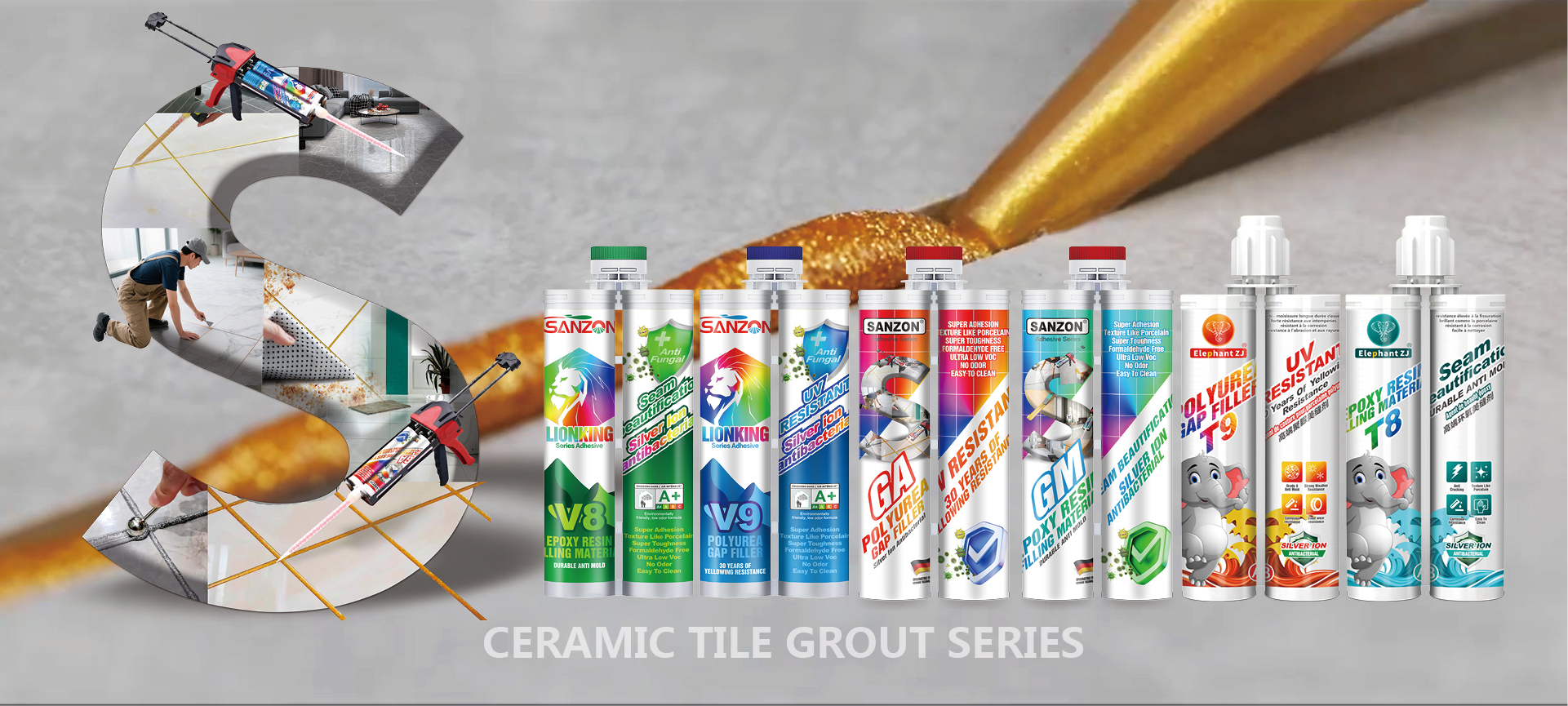
SANZON GM — epoxy tile grout
SANZON GM is a two-component epoxy resin gap filler classified as a seam-beautification type. Verified parameters:
- Two-component A+B room-temperature cure
- Solvent-free; ultra-low VOC
- Odorless and non-toxic
- Rich color series
- Packing: A+B 400 ml × 20 pcs per carton; storage +5 °C to 27 °C
Key performance features include silver ion antibacterial performance, anti-cracking, porcelain-like texture, corrosion resistance and easy cleaning, high adhesion, self-cleaning/oil-proof/waterproof behavior, and resistance to high and low temperature and humidity.
Why epoxy grout for this scenario: for interior tile where color consistency and easy cleaning are the priority, epoxy provides dense, non-porous joints with strong resistance to household stains. It is a practical choice for kitchen backsplashes, bathroom floors, and any installation where the customer expects grout to stay clean and visually consistent.
SANZON GA — polyurea tile grout
SANZON GA is a two-component aspartic-ester polyurea gap filler with silver ion antibacterial performance. Verified parameters:
- Usage temperature: -50 °C to 100 °C
- Weather life: greater than 30 years
- Ultra-low VOC; formaldehyde-free and odorless
- Packing: A+B 400 ml × 20 pcs per carton; storage +5 °C to 27 °C
Its selling points include long-term yellowing resistance, Grade-0 anti-mold performance, corrosion and wear resistance, strong weather and UV resistance, high adhesion and toughness, porcelain-like texture, easy cleaning, and no blackening or peeling.
Why polyurea for this scenario: once tile joints face UV and weather — outdoor patios, terraces, and building facades — the demands change. The joint must keep its color under sunlight and stay flexible across a wider temperature range. GA is designed for that combination, which is why it suits exterior tile projects and any indoor environment where long-term color retention matters.
Scenario 4 — Curtain Wall
Curtain wall joints carry structural and weather requirements that ordinary sealants cannot meet. The specification is usually set by the curtain wall engineer, but the category is clearly defined.
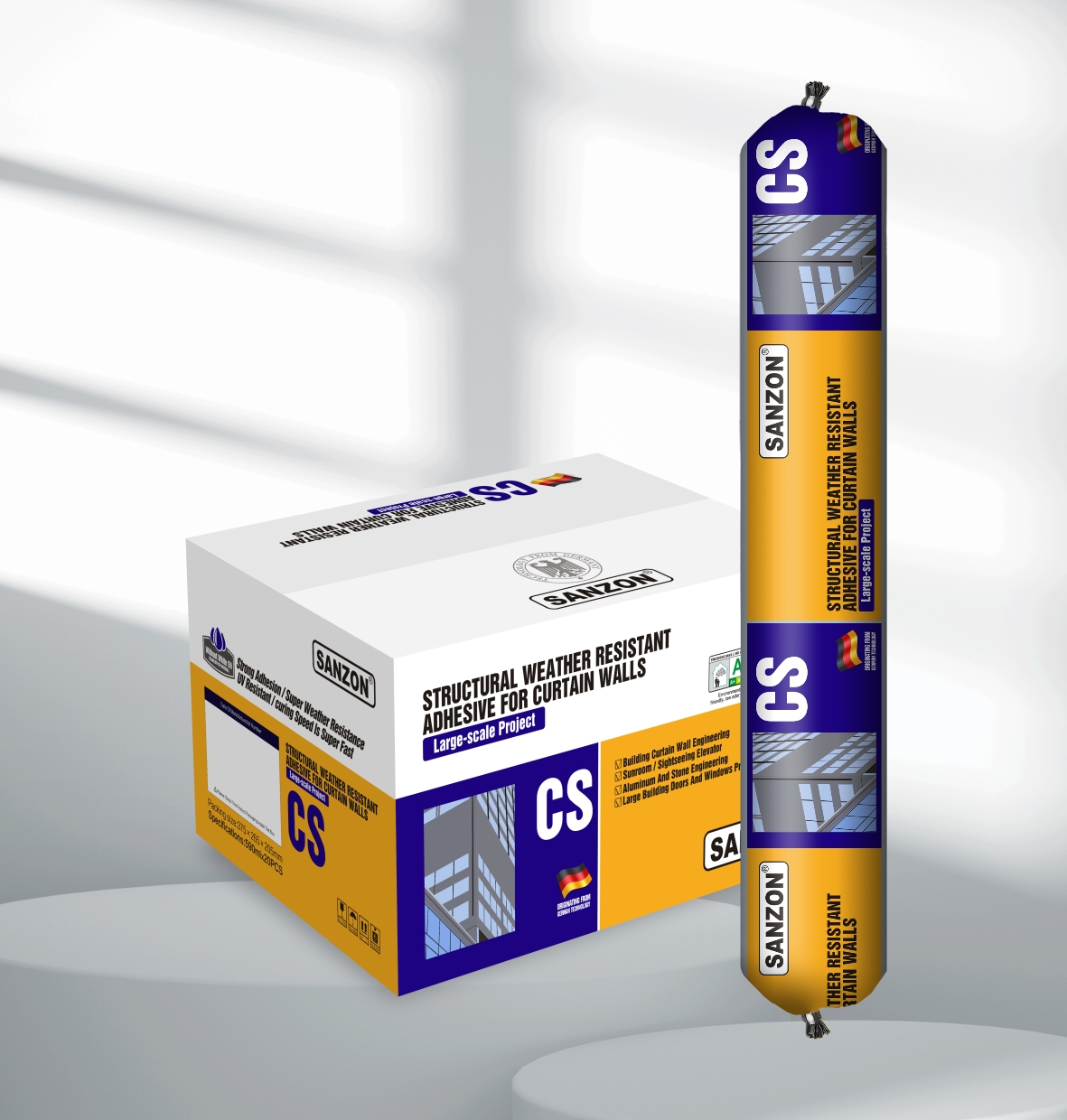
SANZON CS — structural silicone for curtain walls
SANZON CS is a structural silicone sealant classified as a structural weather-resistant adhesive for curtain walls. Its key characteristics:
- Type: structural silicone adhesive
- Formula: without white oil
- Curing speed: super fast
- UV-resistant; strong adhesion; super weather resistance
- Certifications: CE, ISO, RoHS
- French indoor air emission label: A+
Why structural silicone for this scenario: a curtain wall joint is not just a weather seal — in many systems it carries load between glass and frame. General-purpose sealants are not designed for that role. A structural-grade product with the strength and durability to hold up under wind load, thermal movement, and UV exposure is specified for the life of the building. The absence of white oil is relevant because white oil can migrate and weaken long-term adhesion under weathering.
SANZON NS — weather-resistant façade joints
For the non-structural joints around the wall — perimeter joints, panel connections, and frame-to-wall interfaces — SANZON NS brings neutral-cure weather resistance, with usage temperature -50 °C to 150 °C, strong UV, climate, and aging resistance, and cracking resistance. It is specifically suitable for exterior walls and is supplied in 300 ml × 24 pcs or 590 ml × 20 pcs per carton.
Why pair NS with CS: curtain wall systems typically include both structural and non-structural joints. Structural joints need the structural adhesive; the surrounding weather seal joints need a durable exterior-grade sealant that matches the movement and weather resistance of the system.
Scenario 5 — No-Nail Bonding
Not every fix on a construction site is a joint. Sometimes the job is to attach a panel or trim without drilling.
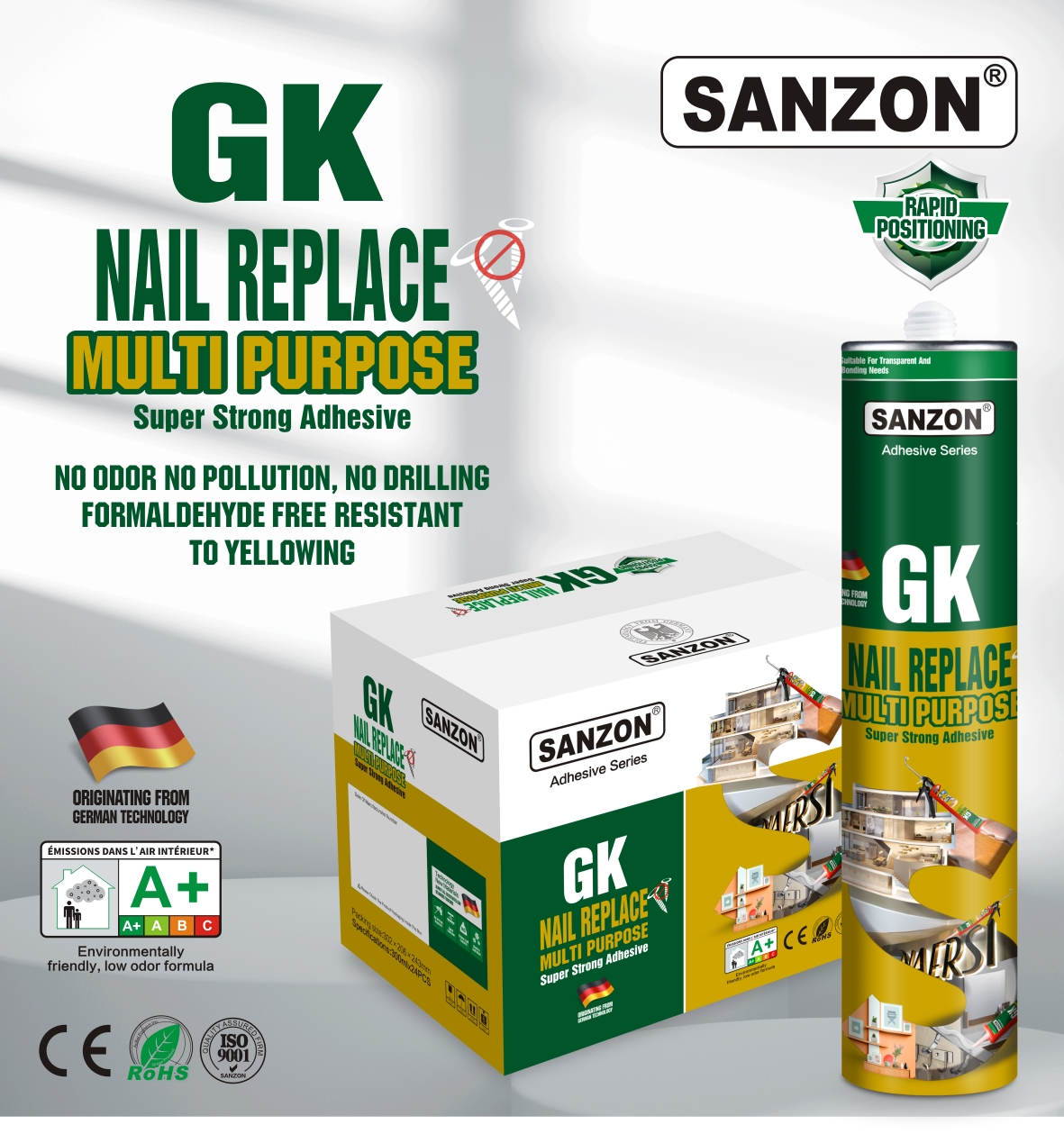
SANZON GK — no-nail adhesive
SANZON GK is a multi-purpose super strong nail-replacement adhesive based on high-polymer chemistry. Verified parameters:
- Fast curing
- Available colors: transparent, white, black, grey, and others
- Packing: 300 ml × 24 pcs per carton; shelf life 18 months
- Formaldehyde-free and benzene-free
Its stated features include high adhesion that replaces nails, the ability to bond wet wood, no need for surface drilling, flexible behavior with no embrittlement, paintable after drying, weather and water resistance, and non-toxic composition.
Why no-nail adhesive for this scenario: fixing with nails or screws damages the substrate and leaves visible fixing points. For furniture assembly, panel bonding, and trim attachment, a fast-curing construction adhesive holds the part while avoiding holes. The wet-wood capability is particularly useful in joinery work where the timber has not fully dried, and the paintability after curing means the joint can be finished without a separate filler step.
How to Choose in Six Steps
If you are specifying on a real project rather than browsing a catalogue, the following sequence prevents most selection mistakes.
- Identify the substrate and joint. Glass, aluminum, concrete, wood, tile, and plastic all have different compatibility requirements. Determine what the sealant must bond to before choosing a chemistry.
- Confirm the exposure environment. Indoor (low odor, low VOC, paintable) or outdoor (UV, rain, wide temperature range). This alone removes several product families from consideration.
- Determine whether the joint moves. Structural joints, façade joints, and joints between dissimilar materials usually need elastic sealants. Filling joints only need gap-filling products.
- Check the specification. Confirm project requirements, local standards, and any certification expectations — for example CE marking or the French indoor air emission label for EU projects.
- Match the product family. PU foam for gap filling; neutral silicone for exterior sealing; acrylic for interior paintable joints; epoxy or polyurea for tile; structural silicone for curtain walls; no-nail adhesive for fixing.
- Validate with a sample. Any change in substrate, weather, or specification justifies checking a sample before large-scale application. Samples and technical selection consultation are available to support this step.
Comparison Table
| Scenario | Recommended SANZON Product | Key Parameter | Why It Fits |
|---|---|---|---|
| Window & door perimeter gap | SANZON TC PU foam | Single-component moisture cure; closed cell >90%; -10 °C to 80 °C | Fast, non-shrinking gap fill with moisture resistance in an insulation-critical location |
| Indoor decoration gaps | SANZON TS PU foam | Odorless; closed cell >90%; -10 °C to 80 °C; pre-foaming | Low-odor, fast-curing gap filling for occupied spaces |
| Window / metal / stone exterior seal | SANZON NS or SANZON GP-N | Neutral cure; -50 °C to 150 °C; UV-resistant | Substrate-friendly neutral chemistry with long-term weather resistance |
| Interior trim / paintable joints | SANZON AS acrylic sealant | Single-component; -10 °C to 80 °C; low VOC; paintable | Paint-compatible, anti-yellowing, low-odor for indoor finishing |
| Kitchen & bathroom wet joints | SANZON KB sanitary silicone | Neutral cure; -50 °C to 150 °C; long-term anti-mold | Anti-mold performance in continuous humidity |
| Interior tile joints | SANZON GM epoxy tile grout | Two-component; solvent-free; ultra-low VOC; rich color series | Dense, non-porous, cleanable joints with strong stain resistance |
| Exterior or high-durability tile joints | SANZON GA polyurea tile grout | Two-component; weather life >30 years; -50 °C to 100 °C | UV and yellowing resistance with Grade-0 anti-mold performance |
| Curtain wall structural joints | SANZON CS structural silicone | Structural grade; without white oil; super fast cure; CE / ISO / RoHS | Load-bearing adhesion plus long-term UV and weather resistance |
| Façade non-structural joints | SANZON NS neutral silicone | Neutral cure; -50 °C to 150 °C; UV and aging resistant | Durable exterior-grade weather seal matched to curtain wall movement |
| Panel / trim / furniture fixing | SANZON GK no-nail adhesive | Fast cure; formaldehyde- and benzene-free; 300 ml cartridge | Drill-free bonding of wet wood, panels, and trim with paintable finish |
Frequently Asked Questions
Neutral-cure silicone sealant is suitable for a wide range of materials, including glass, aluminum, metal, and some types of stone. Acetoxy (acid-cure) silicone sealant generally offers strong adhesion to glass and ceramic materials and produces a characteristic vinegar-like odor during curing. For windows, aluminum, metal, stone, and outdoor weatherproofing, neutral-cure silicone sealant is generally recommended.
The right sealant depends on the application, substrate materials, indoor or outdoor conditions, joint movement, waterproof requirements, temperature resistance, and whether the surface needs to be painted. In practice: PU foam such as SANZON TC handles window and door perimeter gaps; neutral silicone such as SANZON NS or SANZON GP-N handles exterior window, aluminum, and stone joints; epoxy or polyurea grout such as SANZON GM or SANZON GA handles tile joints; and structural silicone such as SANZON CS handles curtain wall structural joints.
Yes. Shandong Sanzeng New Materials provides OEM and private label services for silicone sealant and other sealant products. Customers can customize the brand, packaging, labels, cartridge printing, colors, and other product specifications according to project requirements. This supports distributors, importers, and brand owners who want to build private lines around the SANZON range.
Silicone sealant can be used for sealing and bonding glass, aluminum, ceramic, metal, plastic, wood, windows, doors, bathrooms, kitchens, and various construction joints. PU foam such as SANZON TC and SANZON TS is used for filling gaps around doors and windows and for indoor decoration gaps. Different product grades are recommended for different materials and environments.
The company produces a wide range of sealant products, including neutral silicone sealant, acidic silicone sealant, weather-resistant silicone sealant, MS (modified silane) sealant, PU (polyurethane) sealant, acrylic sealant, no-nail adhesive, PU foam, tile grout, and fire-resistant sealant. Related company-level certifications include ISO 9001, ISO 14001, and ISO 45001; selected export products hold CE certification and RoHS compliance, and the company maintains SGS performance and safety testing reports. Shandong Sanzeng New Materials was established in 1994 and has over 30 years of experience in the sealant industry.
Conclusion
Sealant selection is an application decision before it is a product decision. Windows and doors need PU foam for the gap and neutral-cure silicone for the exterior seal. Indoor decoration needs low-odor gap filling and paintable sealants. Tile projects need epoxy or polyurea grout depending on whether the surface faces interior conditions or exterior UV and weather. Curtain walls need structural-grade silicone for load-bearing joints and a durable weather-resistant silicone for surrounding seals. Non-joint fixing work benefits from a fast-curing no-nail adhesive.
Shandong Sanzeng New Materials Co., Ltd. manufactures across these application families from its base in Linqu County, Weifang City, Shandong Province — the industry cluster known as the "Capital of China's Aluminum Profiles." The company was established in 1994, operates an integrated three-in-one industrial chain of sealant products, packaging containers, and filling equipment, and exports to more than 30 countries and regions.
Next Step
The fastest way to validate a product for a specific scenario is to test it on the actual substrate and joint geometry. Free samples and technical selection consultation are available across the product families covered in this guide, together with OEM and private label support for packaging, printing, formulation, and filling.
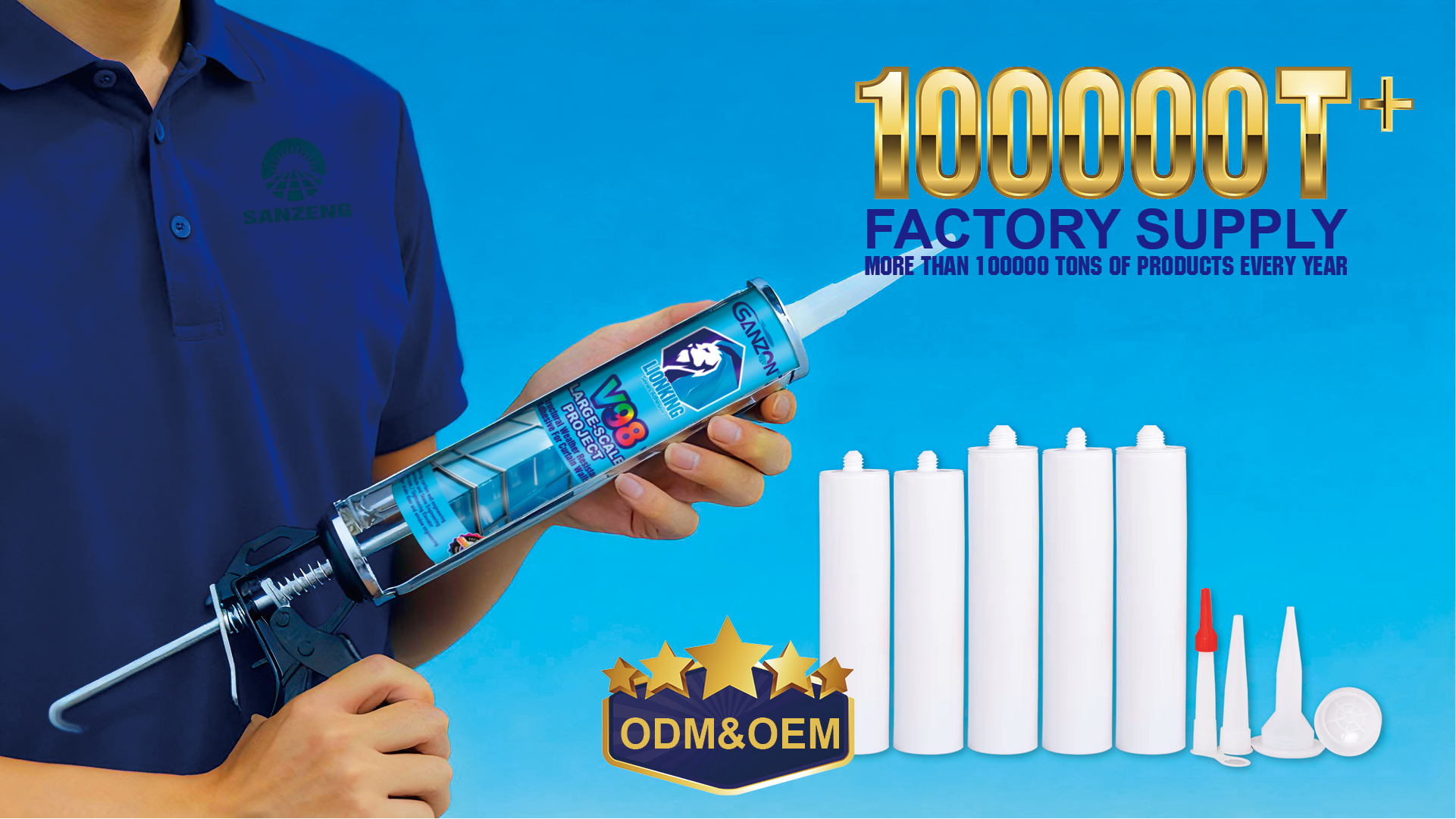
Company profile brochure: Download the SANZON product brochure (PDF).
Contact: Jie Guo · Email: guooj000@163.com · Tel / WhatsApp: +86 185-5361-7774. Website: sanzengsealant.com.
Have Questions or Need More Details?
Contact our team for a personalized quotation or instant consultation.
Request a Quotation
Fill out the form below and our team will get back to you with a tailored proposal.
WhatsApp Direct Chat
Prefer to chat in real-time? Message us on WhatsApp for instant assistance & quick answers.
- Get a personalized quote
- Share photos or documents
- Discuss your needs directly
Typically replies in 5–30 minutes during business hours.