Silicone Sealant Data Sheets: Curing Systems, VOC & Selection Parameters
Silicone Sealant Data Sheets: Curing Systems, VOC & Selection Parameters
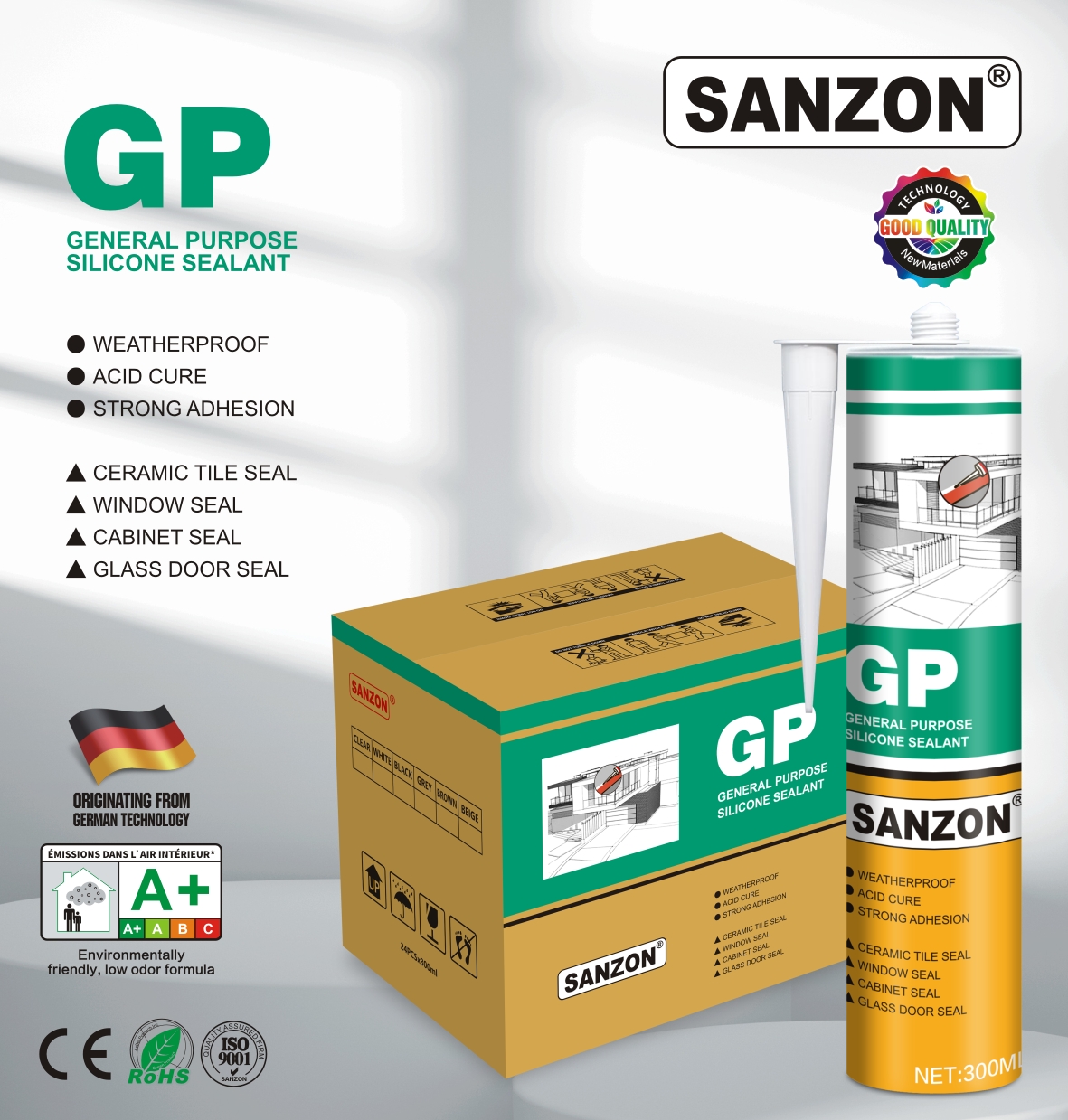
A silicone sealant data sheet is a decision document, not a label. Four lines decide whether a joint performs for its full service life: the curing system (acid cure, neutral cure or moisture-triggered cure), the polymer base (silicone polymer, MS polymer, acrylic polymer or polyurethane), the VOC and emission profile, and the combined service-temperature and shelf-life window. Colour, cartridge volume and carton count are logistics. This guide explains how each parameter behaves, where the parameters conflict with each other, and how to read them against real grades such as SANZON GP (acid cure, room-temperature cure), SANZON MS (neutral cure, high tack) and SANZON GA grout (ultra-low VOC, more than 30-year weather life).
Why Sealant Specifications Fail at the Data-Sheet Stage
Most sealant failures on site are parameter failures rather than product failures. A joint that opens, chalks or loses adhesion usually does so because one line of the technical data sheet (TDS) was read out of context. Three patterns repeat across construction, renovation and industrial work.
Curing chemistry treated as interchangeable. An acetoxy (acid-cure) bead releases acetic acid while it sets, which is exactly why it grips glass and ceramic so quickly — and exactly why it is the wrong starting point over marble, reactive metals or coated panels. Neutral-cure grades exist to remove that constraint. The two chemistries are not substitutes; they are different toolkits.
VOC treated as a marketing word. VOC and indoor-emission performance is a specification line with labelling consequences. Within the range reviewed here, the French indoor air emission label A+ applies to SANZON PA (acetoxy silicone sealant) and SANZON CS (structural silicone adhesive), while SANZON GA polyurea grout and SANZON GM epoxy grout are described as ultra-low VOC. Odour is a separate property: an odourless product is not automatically a low-VOC product, and a low-VOC product is not automatically odourless.
Temperature and shelf life read as single numbers. A service window such as -50°C to 150°C describes the cured joint, not the temperature at which the cartridge should be applied. Shelf life depends on formulation, packaging and storage conditions rather than on a fixed rule of thumb, which is why two-component grouts such as SANZON GA and SANZON GM are stored between +5°C and +27°C.
Why this matters commercially: room-temperature vulcanizing (RTV) sealant technology accounted for a 64.8% revenue share of the global silicone sealant market in 2025 (Grand View Research). Most specified volume therefore cures on site, at ambient temperature, driven by atmospheric moisture — so site temperature, humidity and bead thickness influence the programme as much as the product data itself.
Industry Background: A Market Being Specified More Strictly
The global silicone sealants market was valued at USD 4.5 billion in 2025, with Asia Pacific accounting for a 52.1% revenue share and the construction segment holding a 60.7% share of end use (Grand View Research). Read the scope behind those numbers before using them in a business case: some commercial research aggregators publish a figure as high as USD 7.69 billion for 2024 because they bundle adhesives together with sealants. For sealant-only planning, use the pure-sealant figure and confirm what the analyst included.
Three structural forces are pushing specification discipline:
- Standards. ASTM C920-18(2024) remains the primary performance standard for elastomeric joint sealants used in building construction and was reapproved in November 2024. Movement class is a separate, measurable line on a European-style data sheet: the SANZON CLASSIC, ELEPHANT and LIONKING series data sheet documents 12.5% movement capability to ISO 11600, alongside 500% elongation at break and 1.2 N/mm² tensile strength.
- Regulation. EU Regulation 2024/1328 bans cyclic silicones D4, D5 and D6 in leave-on cosmetics from June 2027 and restricts industrial use at or above a 0.1% concentration threshold. The practical consequence for a specifier buying into Europe is that documented siloxane content, not just a VOC headline, is becoming part of the technical file.
- Trade flows. China exports of silicone under HS 321410 to India grew by USD 16.7 million between 2024 and 2025 (OEC), a reminder that sealant is a traded commodity in which parameter parity — not brand language — wins tenders.
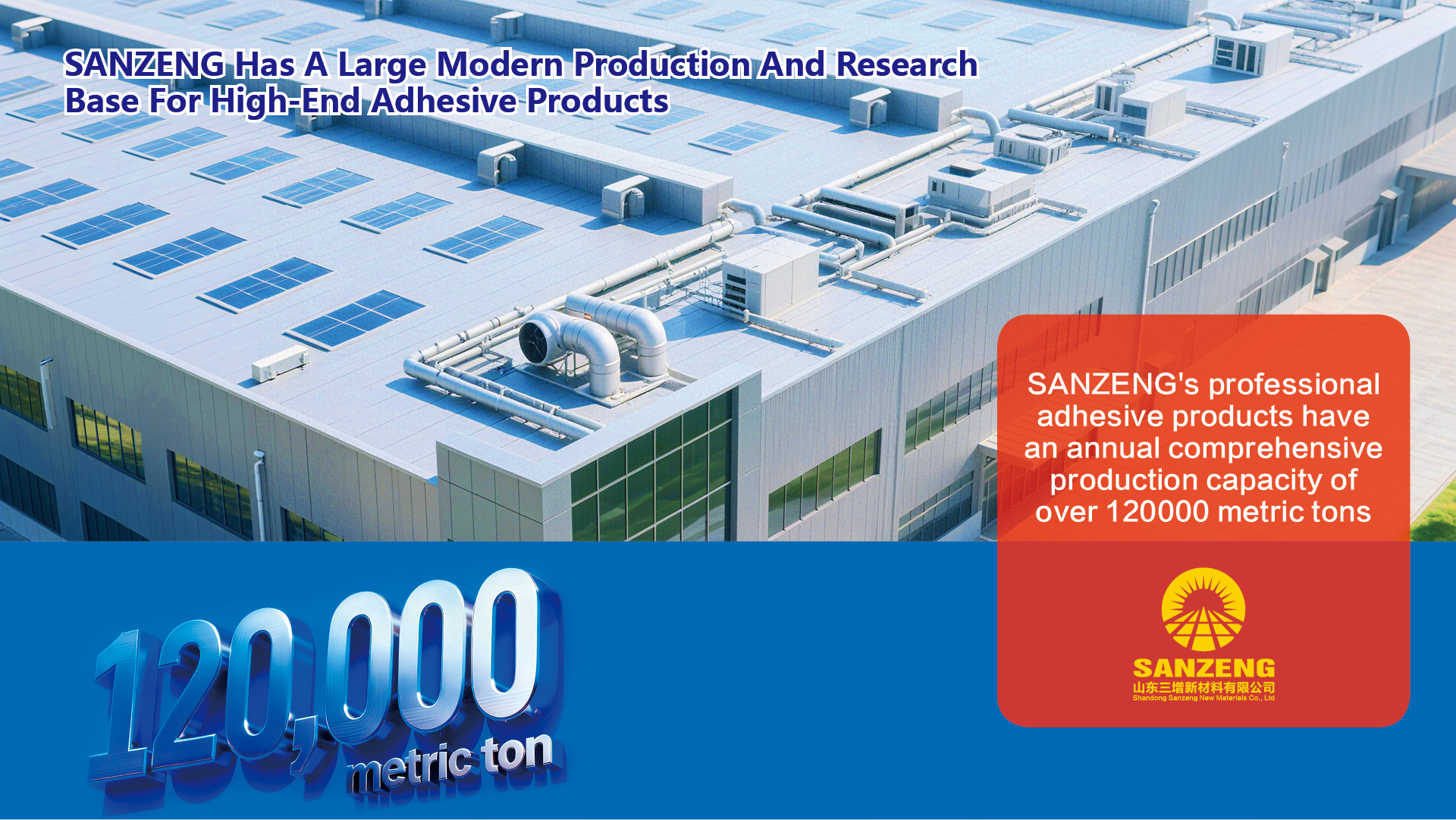
On the supply side, Shandong Sanzeng New Materials Co., Ltd. is a sealant manufacturer headquartered in Linqu County, Weifang City, Shandong Province, a region positioned within China's silicone sealant industrial cluster. The company operates an integrated chain of sealant production, in-house packaging manufacture and filling equipment, works from a 40,000 m² facility with 125 employees and a 10-engineer R&D team, reports an annual output of 8,800,000 units, exports to more than 30 countries and regions with an export ratio of 70%, and holds ISO 9001, ISO 14001 and ISO 45001 certification, with CE and RoHS compliance on selected export products and SGS performance and safety testing reports. For a specifier, vertical integration of formulation, cartridge and fill accuracy under one quality system is the parameter that is hardest to verify from a brochure.
The Four Parameters That Decide a Specification
1. Curing system: acid cure, neutral cure and moisture cure
The curing system tells you what the sealant releases while it sets, which substrates it can safely touch, and how quickly it develops strength. It is the first line to read, because it cannot be corrected later with technique.
Acid cure (acetoxy). Characterised by a vinegar-like acetic acid release and fast grab on glass and ceramic. SANZON GP is an acid-cure general-purpose silicone sealant with room-temperature cure, a silicone polymer base, a -50°C to 120°C service range and a 12-month shelf life, packed at 300 ml × 24 pcs per carton for universal interior decoration. SANZON PA is an acetoxy silicone sealant supplied at 300 ml in six colours (clear, white, black, grey, bronze and beige), with CE, ISO 9001 and RoHS certification and the French indoor air emission label A+.
Neutral cure. Alcohol release, lower odour and compatibility with a wider substrate set, including aluminium, metals, stone and certain plastics. Within the same family, SANZON GP-N is a neutral-cure multi-purpose silicone sealant rated from -50°C to 150°C with a 12-month shelf life; SANZON NS is a neutral-cure silicone structural and weather-resistant grade for exterior walls with UV, climate and aging resistance, supplied as 300 ml × 24 pcs or 590 ml × 20 pcs cartons; SANZON KB is a neutral-cure sanitary anti-mould grade for kitchens and bathrooms that resists mould long-term under high temperature and humidity, also rated -50°C to 150°C.
Moisture cure (one component). Polyurethane foam fillers such as SANZON TC (quick-drying, for building doors and windows) and SANZON TS (odourless, for indoor decoration) are single-component moisture-cure products with more than 90% closed cells, a -10°C to 80°C usage temperature and a 12-month shelf life at 750 ml × 15 pcs per carton.
Two-component ambient cure. SANZON GA polyurea grout and SANZON GM epoxy grout are A+B systems that cure at room temperature, packed at 400 ml A+B × 20 pcs per carton.
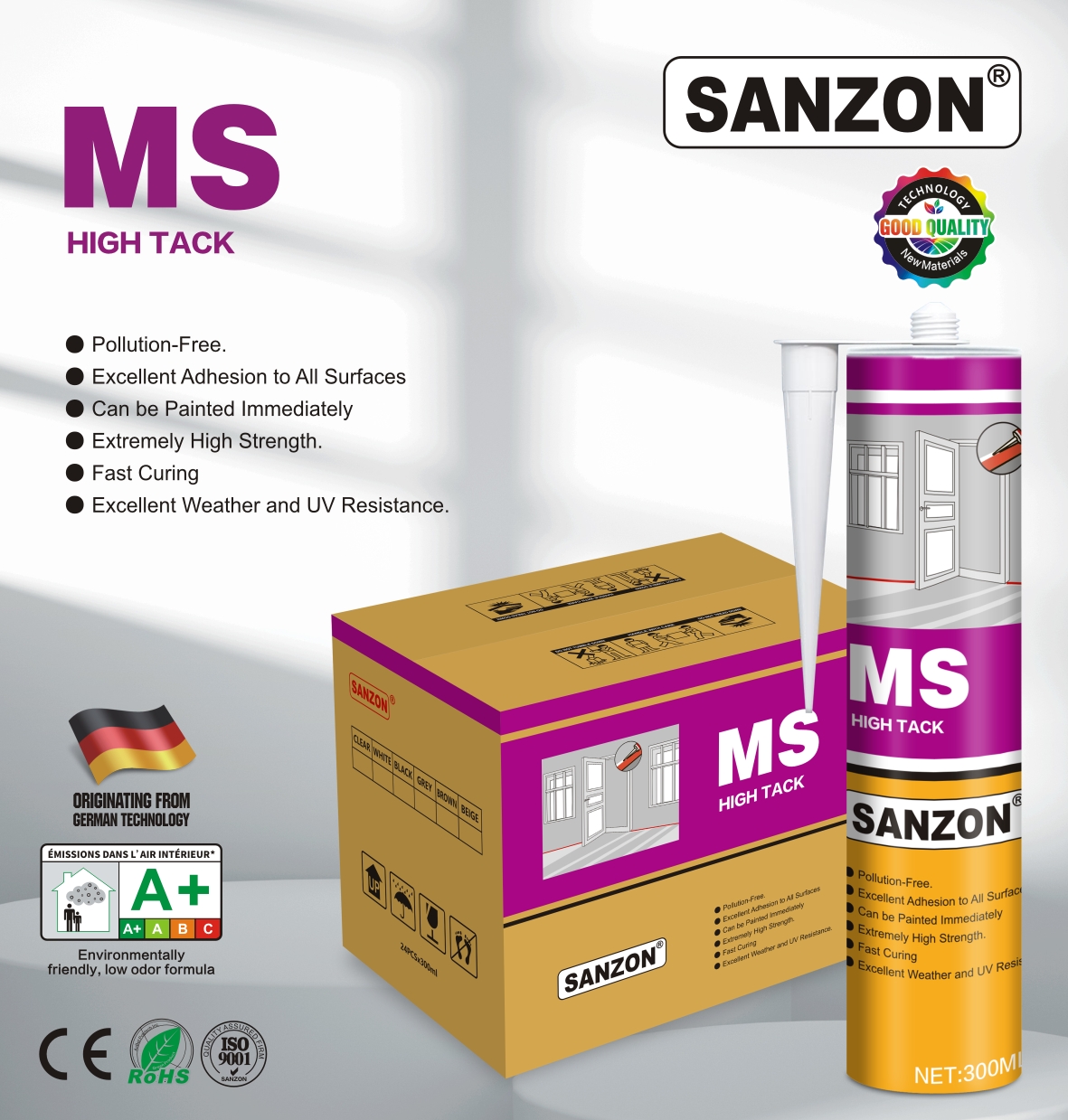
Selection rule of thumb: choose an acetoxy grade when fast curing and strong adhesion to glass and non-porous surfaces are the priority; choose a neutral-cure grade when low odour, substrate compatibility and sensitive materials such as aluminium, stone or certain plastics matter more. Note also that traditional silicone sealants are generally not designed to be painted after curing — where the joint will be coated, a paintable MS polymer or acrylic grade is the correct starting point.
2. Polymer base
The polymer base determines the balance of movement, weather resistance, paintability and cost. Four bases cover most construction and decoration specifications.
- Silicone polymer. The default for weather, UV and temperature stability. Neutral silicone grades in this range are rated from -50°C to 150°C. The general series data sheet is more conservative, listing 18 Shore A hardness, 12.5% movement capability (ISO 11600), 500% elongation at break, 1.2 N/mm² tensile strength and a -20°C to 60°C temperature resistance — a useful reminder that parameters belong to a specific data sheet, not to the word "silicone".
- MS polymer (silane-modified). Described in the product literature as solvent-free, isocyanate-free and low-VOC, with paintable and primer-less adhesion to most substrates — positioned for European and Japanese markets. SANZON MS is a high-tack neutral-cure MS polymer sealant with 300 ml × 24 pcs packaging, a 12-month shelf life, formaldehyde-free and odourless formulation, high strength, fast curing and UV resistance, and suitability for humid environments.
- Acrylic polymer. Cost-effective, paintable and low-odour for interior work. SANZON AS is a single-component paintable acrylic sealant with a -10°C to 80°C usage temperature, low VOC/low odour formulation, anti-bacterial and anti-fungus properties, crack resistance and a 12-month shelf life.
- Polyurethane. High bond strength with elasticity and abrasion resistance, paintable, and typically used for wood, concrete and metal bonding; polyurethane foam additionally provides thermal and acoustic insulation plus gap filling in one operation.
3. VOC and emission profile
VOC is a compliance line, not a slogan. Where a formulation has a documented profile it should be stated explicitly; where it does not, the honest answer is to request the TDS and the supporting test report rather than assume.
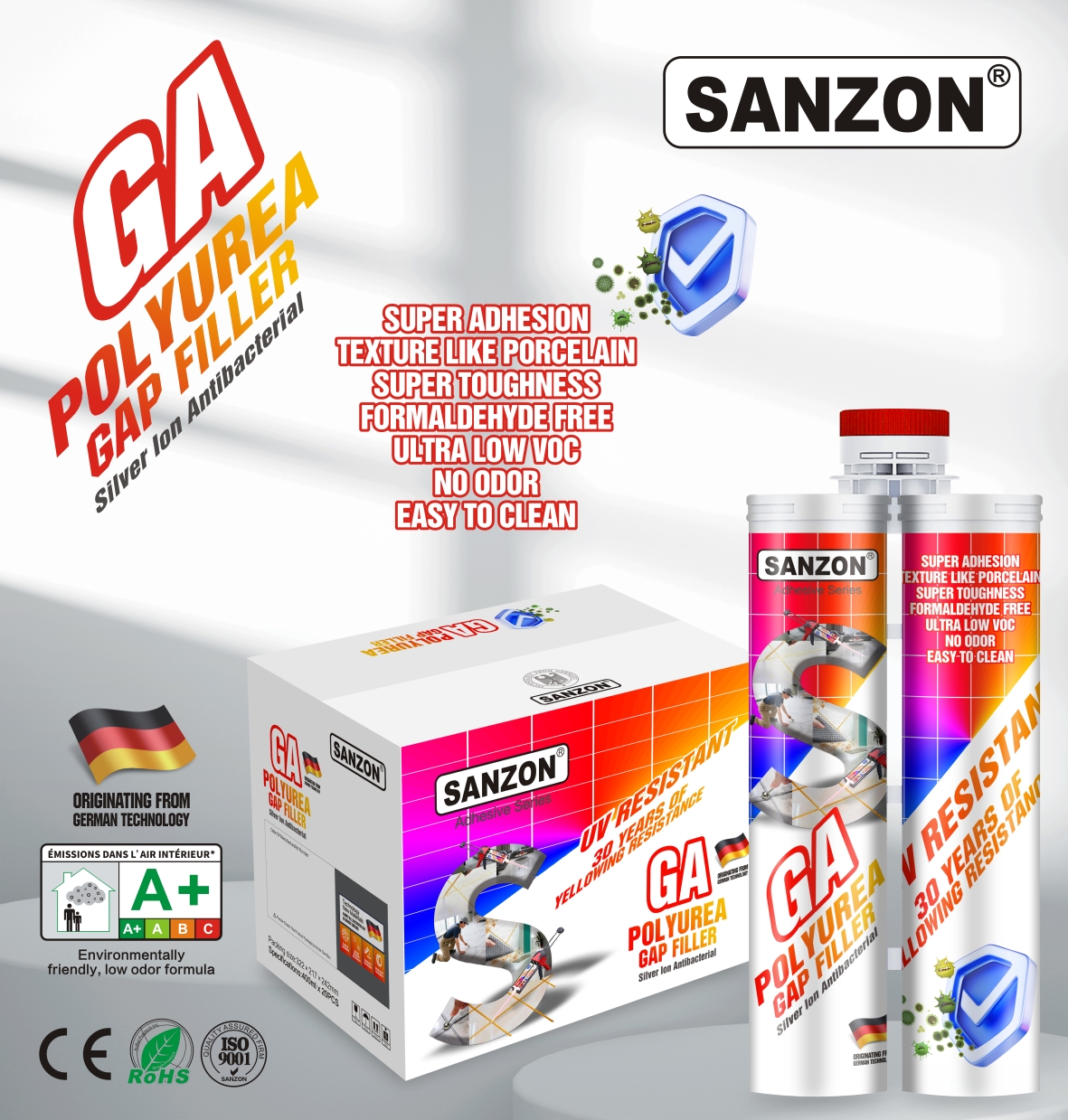
- SANZON GA polyurea grout: ultra-low VOC, formaldehyde-free and odourless, silver-ion antibacterial, grade-0 anti-mould, with 30-year yellowing resistance and more than 30-year weather life.
- SANZON GM epoxy grout: solvent-free with ultra-low VOC, odourless and non-toxic.
- SANZON AS acrylic sealant: low VOC / low odour.
- MS polymer grades: solvent-free, isocyanate-free and low-VOC.
- French indoor air emission label A+ on SANZON PA and SANZON CS.
Two regulatory layers sit behind those product claims. Indoor-air and VOC labelling is product-specific and document-based. Siloxane regulation is moving independently: EU Regulation 2024/1328 bans cyclic silicones D4, D5 and D6 in leave-on cosmetics from June 2027 and restricts industrial use at or above 0.1%. Performance classification is a third, separate layer governed by standards such as ASTM C920-18(2024) for elastomeric joint sealants. A complete technical file therefore needs all three — performance class, VOC/emission evidence and siloxane documentation — not just the line that looks best on a marketing sheet.
4. Service temperature and shelf life
Temperature and shelf life are the parameters most often quoted and least often tested against reality. In this range, the cured-joint service windows are -50°C to 120°C for SANZON GP, -50°C to 150°C for SANZON GP-N, SANZON NS and SANZON KB, -10°C to 80°C for SANZON AS, SANZON TS and SANZON TC, and -50°C to 100°C for SANZON GA. Shelf life is 12 months for the silicone, MS, acrylic and foam grades listed here, and 18 months for the SANZON GK and GS no-nail construction adhesives.
Curing time is a function of temperature, humidity, product type and bead thickness: the surface skins over first, while full cure takes longer — the specific schedule belongs to the product data sheet. Storage is equally part of the specification: silicone sealant should be kept in a cool, dry, well-ventilated place away from direct sunlight, excessive heat and moisture, and used within the stated shelf-life period, while two-component grouts are stored between +5°C and +27°C.
Step-by-Step: How to Read a Sealant Data Sheet in Order
Reading order matters, because a parameter that fails early makes the later ones irrelevant. Use this sequence when comparing two suppliers.
- Polymer base and curing system. Confirm what the sealant is and what it releases — acid cure, neutral cure, moisture cure or two-component ambient cure.
- Substrate compatibility. Check whether the chemistry suits glass, aluminium, stone, coated panels or plastics, and whether a primer is required.
- Movement capability and elasticity. Look for a movement class and elongation figure, for example 12.5% movement capability to ISO 11600 and 500% elongation at break on the general series data sheet.
- Service temperature against project conditions. Compare the cured-joint window with the actual site: -50°C to 150°C for the neutral silicone grades, -10°C to 80°C for acrylic and PU foam grades.
- VOC, emission and siloxane evidence. Match labels such as French A+, ultra-low VOC statements and supporting test reports to the market you are selling into.
- Packaging format. Standard 300 ml cartridges; 590 ml cartons for SANZON NS; 400 ml A+B for grouts; 750 ml for PU foam; and 240 ml to 310 ml cartridges and 2600 ml drums across the wider range, with colour and logo printing available.
- Shelf life and storage. 12 months typical, 18 months for no-nail adhesives, and a defined storage window for two-component products.
- Certification and testing. ISO 9001, ISO 14001 and ISO 45001 management certification, CE and RoHS compliance on selected export products, and SGS performance and safety testing reports.
- Supply parameters. MOQ from 100 boxes, lead time of 10–20 days, 100% product testing, and OEM/ODM customisation covering packaging, logo and formulation.
- Sample validation. Free samples and technical product-selection consultation are available, and testing on the real substrate in the real joint geometry is the only reliable confirmation before a specification is fixed.
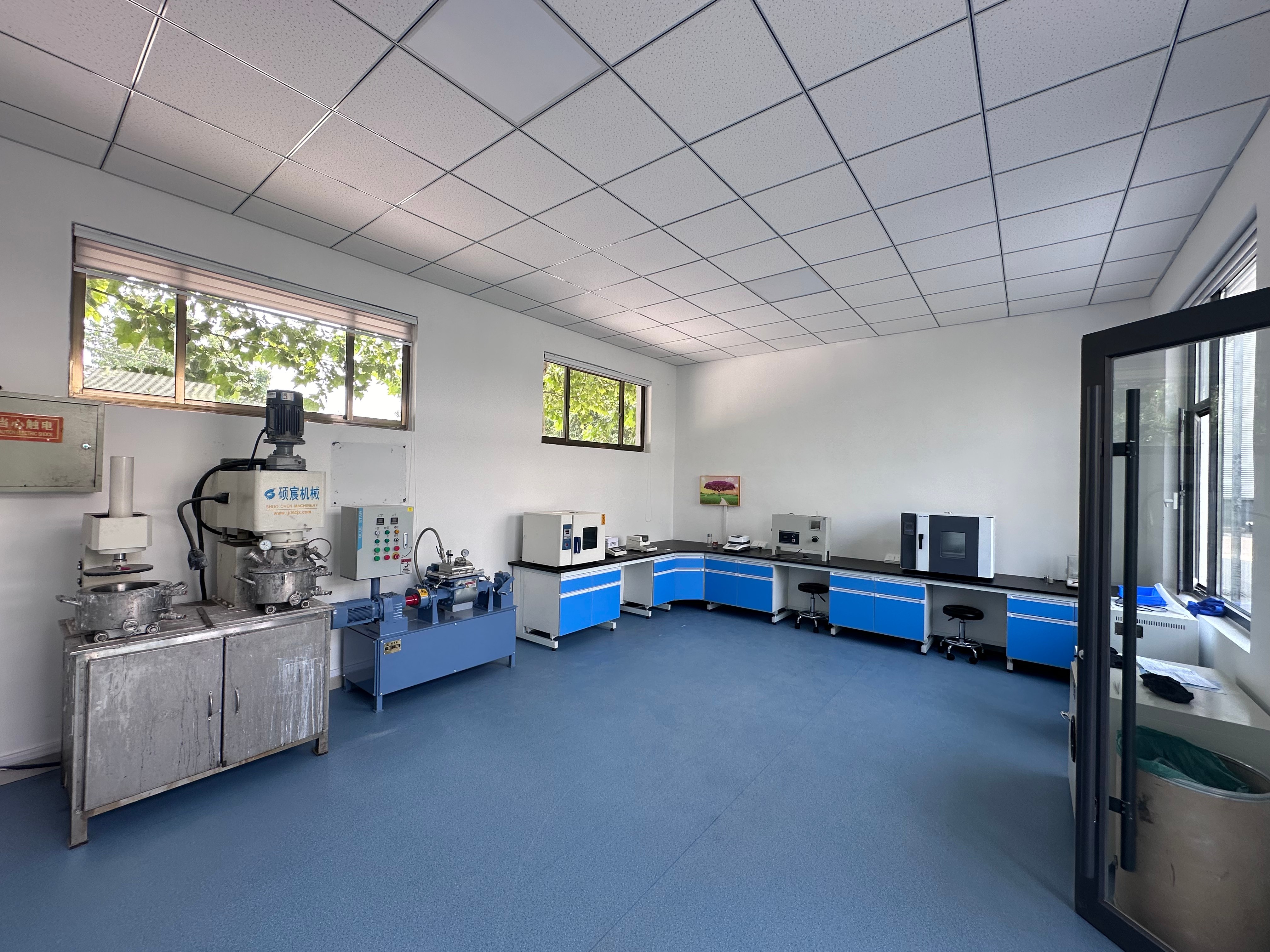
Verifying the supplier, not only the product: integrated manufacturing is visible in public records. A published B2B company profile lists this manufacturer's automatic silicone gel sealant filling machines in the USD 5,200–12,600 per set range, and the same company produces its own PP/PE cartridges rather than buying them in — two signals that separate a scale manufacturer from a trading operation.
Use Cases: Matching Parameters to Project Conditions
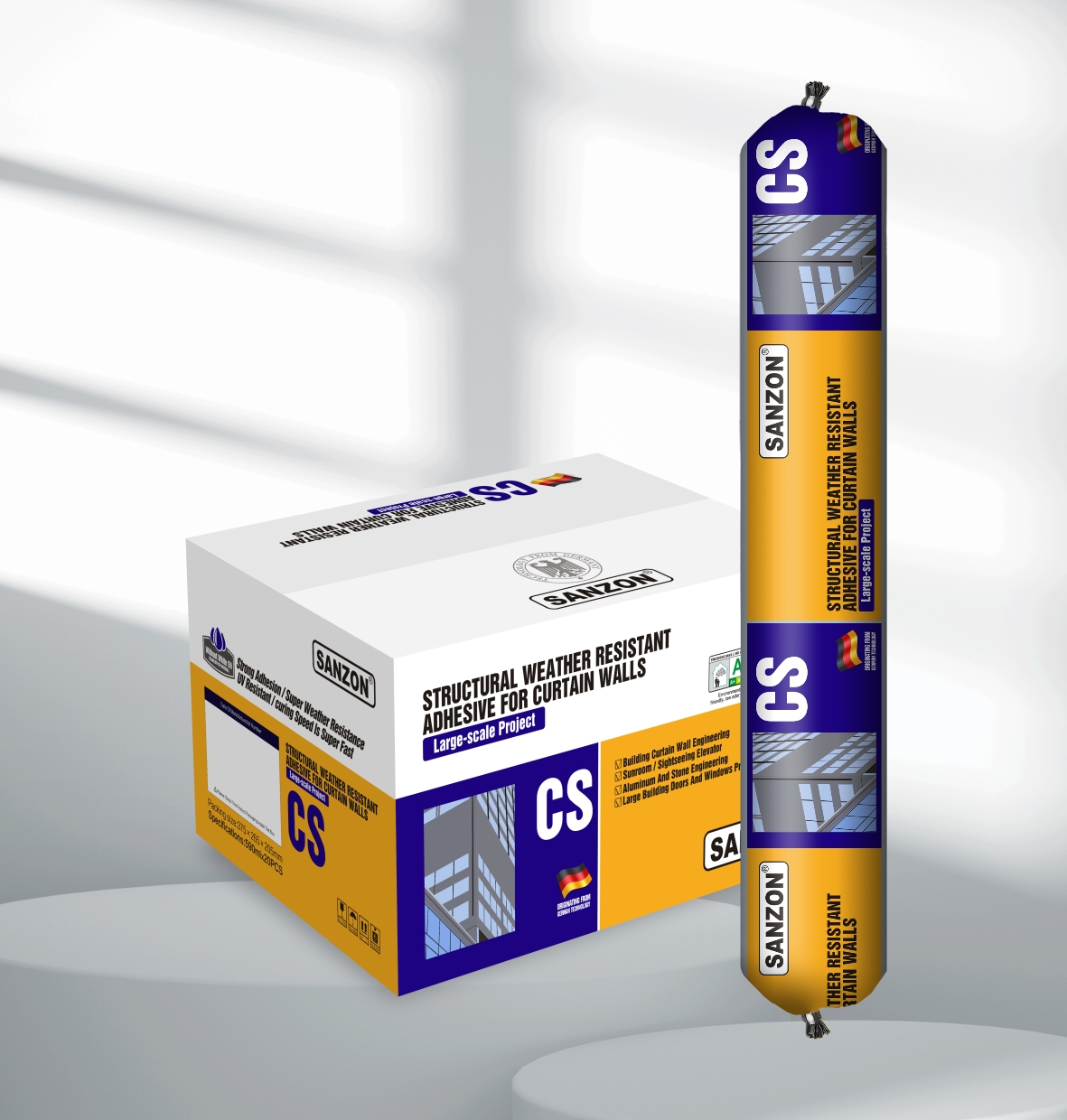
Curtain wall, façade and structural glazing (glass, aluminium, stone). Specify neutral cure and confirm movement capability. SANZON CS is a structural silicone adhesive formulated without white oil, with super-fast curing, UV resistance, CE, ISO and RoHS certification and the French A+ indoor air emission label. SANZON NS is the neutral-cure structural and weather-resistant grade for exterior walls. Field evidence from delivered project work: 2,000,000 cartridges supplied over two years to global engineering and construction companies, with stable operation and no leakage, and all-weather durability from -40°C to +150°C with UV resistance and no cracking or chalking after years of outdoor exposure.
Windows, doors and frame insulation. Neutral silicone grades seal frame joints, while SANZON TC quick-drying one-component PU foam (>90% closed cell, -10°C to 80°C, 750 ml × 15) fills and insulates the cavity behind the frame; SANZON TS is the odourless variant for indoor decoration.
Kitchen and bathroom sanitary joints. SANZON KB is a neutral-cure anti-mould grade rated -50°C to 150°C, formulated for long-term mould resistance under high temperature and humidity, with waterproof sealing, high adhesive strength and easy cleaning — the correct parameter set for wet areas rather than a general-purpose acid grade.
Interior decoration where the joint will be painted. SANZON AS acrylic sealant is paintable, low-VOC and low-odour, with anti-bacterial, anti-fungus and anti-yellowing properties in a -10°C to 80°C window. SANZON MS delivers painting-compatible performance after cure with a formaldehyde-free, odourless formulation that also suits humid environments.
Tile joints and hard-surface finishing. SANZON GA polyurea grout is a two-component A+B room-temperature-curing system with silver-ion antibacterial action, ultra-low VOC, formaldehyde-free and odourless composition, a -50°C to 100°C usage window and more than 30-year weather life. SANZON GM epoxy grout covers the same joint type with a solvent-free, ultra-low VOC formulation and a rich colour series.
Fire-rated and industrial sealing. SANZON FS is a flame-retardant fire silicone sealant with high-temperature resistance and a 12-month shelf life. For demanding industrial service such as continuous 24/7 ventilation and exhaust sealing in high-temperature plant environments, the requirement set is excellent adhesion, chemical resistance, high-temperature aging resistance, UV resistance, weather resistance, water resistance, crack resistance, low shrinkage, fast curing and long-term durability — all of which must be matched grade by grade against the TDS rather than assumed from a product family name. The same project evidence notes use by automotive OEM clients, where body seam sealing and windshield bonding apply.
Parameter Comparison: Grades Side by Side
The table below compares parameters exactly as they are stated in the reviewed product data. Where a value is not published, the correct action is to request it on the technical data sheet before specification — not to infer it from a neighbouring grade.
| Grade (model) | Polymer base | Curing system | Service temperature | Shelf life / storage | VOC & emission evidence |
|---|---|---|---|---|---|
| SANZON GP | Silicone polymer | Acid cure, room temperature | -50°C to 120°C | 12 months | Not stated in reviewed data — request TDS |
| SANZON GP-N | Silicone polymer | Neutral cure, room temperature | -50°C to 150°C | 12 months | Not stated in reviewed data — request TDS |
| SANZON NS | Silicone polymer | Neutral cure, structural + weather resistant | -50°C to 150°C | 12 months | Not stated in reviewed data — request TDS |
| SANZON KB (sanitary) | Silicone polymer | Neutral cure, anti-mould | -50°C to 150°C | 12 months | Not stated in reviewed data — request TDS |
| SANZON MS | MS (silane-modified) polymer | Neutral cure, high tack | Not stated in reviewed data — request TDS | 12 months | Solvent-free, isocyanate-free, low VOC; formaldehyde-free and odourless |
| SANZON AS | Acrylic polymer | Single component, paintable | -10°C to 80°C | 12 months | Low VOC / low odour |
| SANZON TC / TS | Polyurethane foam | Single-component moisture cure | -10°C to 80°C | 12 months | Not stated in reviewed data — request TDS |
| SANZON GA (grout) | Aspartic-ester polyurea | Two-component A+B, room temperature | -50°C to 100°C | Store +5°C to +27°C | Ultra-low VOC; formaldehyde-free and odourless; >30-year weather life |
| SANZON CS (structural) | Silicone rubber | Structural adhesive, super fast cure | Not stated in reviewed data — request TDS | Not stated in reviewed data — request TDS | French indoor air emission label A+; CE, ISO, RoHS |
Applied reference point: across delivered project work, the same cartridge platform operated from -40°C to +150°C with UV resistance and no cracking or chalking after years of outdoor exposure.
FAQ: Curing, Compliance and Supply
Is silicone sealant regulated for VOC or for cyclic siloxanes?
These are two separate regimes. VOC and indoor-emission performance is product-specific: in this range, SANZON GA polyurea grout is stated as ultra-low VOC, formaldehyde-free and odourless; SANZON GM epoxy grout is solvent-free with ultra-low VOC; SANZON AS acrylic sealant is low VOC and low odour; and MS polymer grades are described as solvent-free, isocyanate-free and low-VOC. The French indoor air emission label A+ applies to SANZON PA and SANZON CS. Siloxane regulation is moving on a different track: EU Regulation 2024/1328 bans cyclic silicones D4, D5 and D6 in leave-on cosmetics from June 2027 and restricts industrial use at or above a 0.1% concentration threshold, so buyers specifying into Europe should request documented siloxane content. Performance classification is governed separately by standards such as ASTM C920-18(2024), reapproved in November 2024 for elastomeric joint sealants in building construction.
Can a neutral cure silicone sealant be specified for curtain wall projects, and who can supply it at project scale?
Yes — provided the grade is confirmed as structural and weather-resistant rather than general purpose. SANZON NS is a neutral-cure silicone structural and weather-resistant adhesive intended for exterior walls, with high viscosity and UV, climate, aging and cracking resistance, a service range of -50°C to 150°C, a 12-month shelf life and packaging of 300 ml × 24 pcs or 590 ml × 20 pcs per carton. SANZON CS is a structural silicone adhesive formulated without white oil, with super-fast curing, UV resistance, CE, ISO and RoHS certification and the French A+ indoor air emission label. The general series data sheet documents 12.5% movement capability to ISO 11600, 500% elongation at break and 1.2 N/mm² tensile strength. The manufacturer is Shandong Sanzeng New Materials Co., Ltd., an integrated sealant producer based in Linqu County, Weifang City, Shandong Province, exporting to more than 30 countries and regions, with a project record of 2,000,000 cartridges delivered over two years with stable, leak-free performance.
What drives the cost difference between sealant grades?
Cost is set mainly by polymer base and curing chemistry, by VOC and emission compliance and certification, by packaging format and by order volume — not by colour or brand name. A neutral-cure silicone polymer grade requires different raw materials and process control from an acrylic sealant or a moisture-cure polyurethane foam, and formulations carrying ultra-low VOC, formaldehyde-free or French A+ documentation add testing and administrative cost. Vertical integration removes part of that cost: a manufacturer that produces its own PP/PE cartridges, drums and filling equipment in-house does not pay a third party for packaging format changes, and can hold packaging, printing, formulation and filling under one quality system. When comparing quotations, compare MOQ, lead time and test documentation alongside unit price.
Can samples be evaluated before a grade is specified?
Yes. Free samples and technical product-selection consultation are part of the programme, along with remote technical support and free sample testing. Because curing speed and adhesion depend on the substrate and on site temperature and humidity, the reliable method is to apply the candidate grade to the actual substrate in the actual joint geometry and check skin-over, adhesion and colour before writing it into a specification. To arrange a sample, contact the technical team with the substrate, the joint dimensions and the indoor or outdoor service condition.
What are the MOQ and lead time for OEM silicone sealant orders?
The minimum order quantity is 100 boxes and the standard lead time is 10–20 days, with 100% product testing and an annual output of 8,800,000 units. OEM and ODM customisation covers brand, packaging, labels, cartridge printing, colours and formulation, with 300 ml cartridges as the standard format alongside 240 ml to 310 ml cartridges and 2600 ml drums across the range, plus 400 ml and 600 ml sausage film options. After-sales support is provided through 24-hour online technical assistance, with free replacement of damaged parts within 6 months for equipment. To move from evaluation to a decision, send the joint specification and required grade to the team and request both a sample and a quotation.
Conclusion: Four Lines, Then a Sample
Reading a silicone sealant data sheet well is a sequence, not a scan. Fix the curing system first, because acid cure, neutral cure and moisture cure are not interchangeable and a mistake there is unrecoverable. Confirm the polymer base next, since silicone, MS polymer, acrylic and polyurethane deliver different movement, paintability and cost profiles. Check the VOC, emission and siloxane evidence against the market you sell into — the French A+ label on SANZON PA and SANZON CS, the ultra-low VOC position of SANZON GA and SANZON GM, and the tightening siloxane rules in Regulation (EU) 2024/1328. Then read the temperature window and shelf life as a matched pair, and close with packaging, certification and supply parameters.
Four lines, correctly read, will eliminate most specification risk before a single cartridge is opened. The remaining risk is site-specific — and that is what a sample is for.
Request a sample, a quotation or the technical catalogue
Shandong Sanzeng New Materials Co., Ltd. supplies silicone sealants (acid-curing, neutral-curing, weather-resistant, general-purpose and structural types), MS polymer sealants, acrylic sealants, PU sealants, no-nail adhesives, PU foam, tile grout and fire-resistant sealants, with free samples, technical selection support and OEM/ODM packaging. Download the SANZON LIONKING Series Adhesives catalogue (PDF).
Website: www.sanzengsealant.com
Email: guooj000@163.com
Tel / WhatsApp: +86 185-5361-7774 | Message us on WhatsApp
Contact: Jie Guo
Address: East Road, 100 Meters North Of Zhongbai Supermarket, Haojiazhuang Village, Dongcheng Street, Weifang, Shandong, China
Have Questions or Need More Details?
Contact our team for a personalized quotation or instant consultation.
Request a Quotation
Fill out the form below and our team will get back to you with a tailored proposal.
WhatsApp Direct Chat
Prefer to chat in real-time? Message us on WhatsApp for instant assistance & quick answers.
- Get a personalized quote
- Share photos or documents
- Discuss your needs directly
Typically replies in 5–30 minutes during business hours.