Silicone Sealant Compliance Guide: Reading Regional Certificates Against Product Claims
A supplier folder arrives with an ISO 9001 certificate, a CE declaration, a RoHS report, a French A+ indoor air label and a German packaging registration number. Read alone, none of those documents tells you whether the neutral-cure cartridge in the quotation is the product that was tested. Silicone sealant compliance is a matching exercise: each written claim has to be tied to a document whose scope, product designation, standard reference and regional acceptance language cover that exact claim, and nothing beyond it.
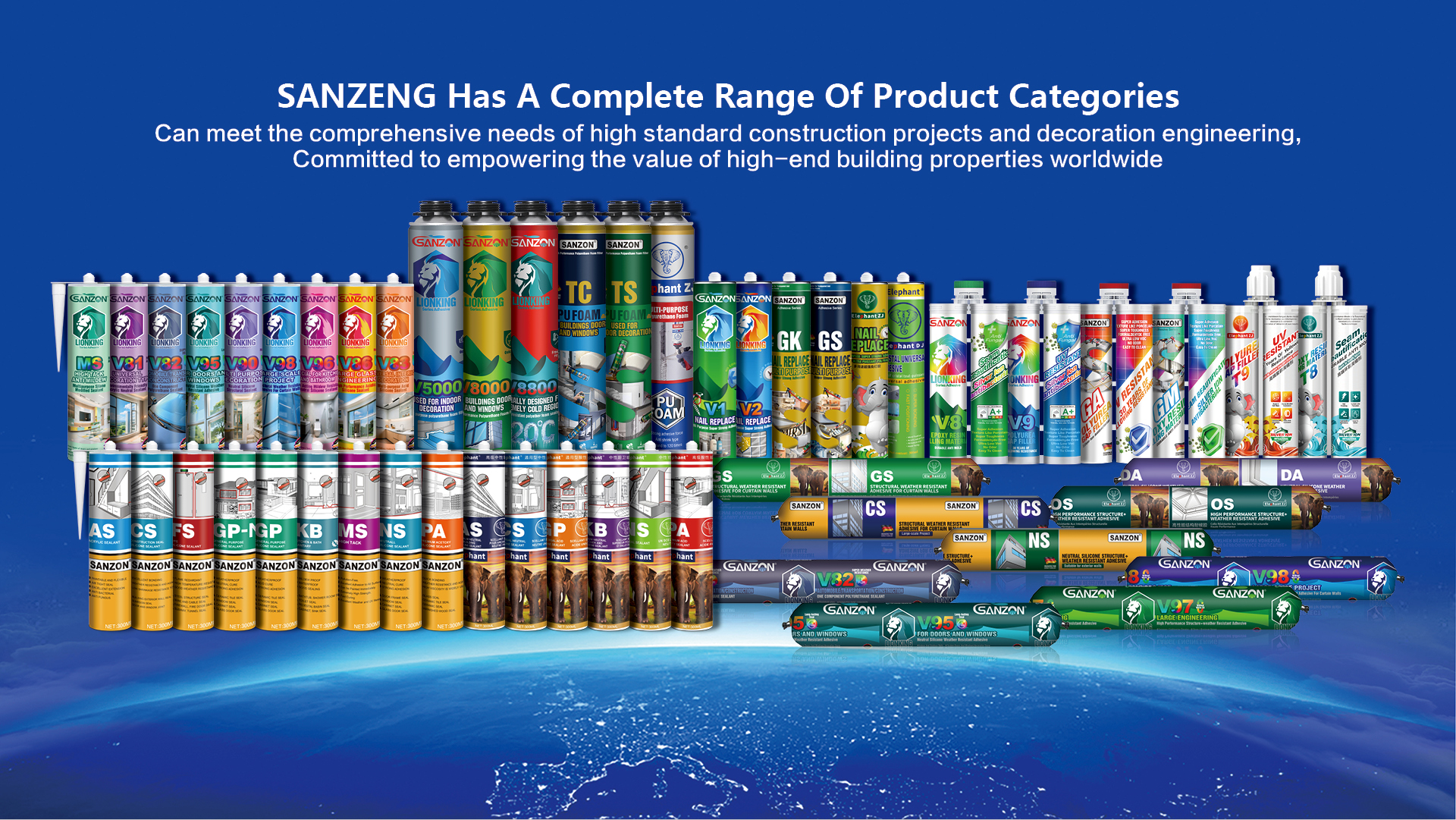
This guide sets out a repeatable way to do that matching across five claim categories that buyers routinely merge: general purpose acid-cure, neutral cure, mildew-resistant sanitary, firestop and structural. It uses documented SANZON references as worked examples of how far a certificate actually reaches, including the SANZON PA acetoxy (acid-cure) grade, the SANZON GP general purpose sealant, the SANZON GP-N and SANZON NS neutral grades, the SANZON KB sanitary grade, the SANZON FS firestop grade and the SANZON CS structural grade.
Shandong Sanzeng New Materials Co., Ltd. (SANZON) is an integrated sealant supplier headquartered in Linqu County, Weifang City, Shandong Province, China, active in the silicone sealant industry since 1994 and covering sealant production, packaging containers and filling equipment in a single chain. Its company-level certificates are ISO 9001, ISO 14001 and ISO 45001; selected export products hold CE certification and RoHS compliance certification, and the company holds SGS performance and safety testing reports. Those are four different kinds of evidence, and the rest of this article is about keeping them apart.
What a silicone sealant compliance claim actually is
Buyers use the phrase "compliant silicone sealant" for five different kinds of claim, and each one fails in a different way when the evidence is wrong:
- General purpose acid-cure. An acetoxy-cure sealant. The claim is about cure chemistry, adhesion to non-porous surfaces and everyday sealing, not about weather resistance or structural duty.
- Neutral cure. An alcohol-release sealant, often combined with a weatherproof or weather-resistant claim for exterior joints, and used where a non-acidic cure is needed next to metals, coated surfaces or stone.
- Mildew-resistant sanitary. A neutral-cure grade for kitchens and bathrooms, where the claim is long-term anti-mold performance in high temperature and high humidity.
- Firestop. A fire-rated sealing claim for joints or penetrations, which is a statement about performance under fire conditions, not about chemistry.
- Structural. A load-bearing adhesive claim, where the sealant is treated as part of a designed joint and the evidence required goes beyond a product listing.
The second problem is that documents exist at four different levels, and a document from one level cannot answer a question from another:
- Level 1, system. ISO 9001, ISO 14001 and ISO 45001 certificates. These describe the management system of the organisation or site. They say nothing about the performance of a specific cartridge.
- Level 2, market access and packaging. For example the German Packaging EPR registration under VerpackG. This is a producer-responsibility registration for sales packaging.
- Level 3, sample or material testing. RoHS reports and SGS performance and safety test reports. These cover the sample or material actually submitted, within the stated scope.
- Level 4, product. A model-level data sheet with values and classes, a product-specific declaration, or an indoor air emission label issued for that grade.
Most compliance disputes in sealant procurement are level confusion. A buyer accepts a level 1 or level 2 document as proof of a level 4 claim, and the file looks complete until a project reviewer asks which model was tested.
Why regional documents are not interchangeable
The commercial weight behind this paperwork is large. Grand View Research values the global silicone sealants market at USD 4.5 billion in 2025, with Asia Pacific holding a 52.1% revenue share, room-temperature-vulcanizing (RTV) products at 64.8% and construction at 60.7% of end use. The same research landscape shows estimates for adjacent years ranging from roughly USD 4.0 billion to USD 7.7 billion, and the main reason cited is scope: some studies include adhesives and some do not. That is exactly the error buyers make with certificates — a larger number, or a longer document, is not the same scope.
Standards themselves are regional artefacts. ASTM C920-18(2024), the ASTM specification for elastomeric joint sealants used in building construction, was reapproved in November 2024 and is a United States reference. A European specification will usually name a different designation, and EN 15651 is the designation buyers most often write into an RFQ. The useful question is not which supplier mentions the designation, but which document names it for which model and which class.
Substance rules add a third layer that no product logo addresses. Commission Regulation (EU) 2024/1328 restricts the cyclic silicones D4, D5 and D6, banning them in leave-on cosmetics from June 2027 and restricting industrial use at a 0.1% threshold, with an effective date of 16 May 2024. A certificate folder that predates or ignores that layer is not necessarily wrong; it is answering a different question.
Trade data shows the same aggregation problem. China's exports of silicone under HS 321410 to India grew by USD 16.7 million between 2024 and 2025 according to OEC bilateral trade data, but that customs heading aggregates silicone sealants, so it cannot tell a buyer how much of the volume was neutral cure and how much was acetoxy. Aggregated evidence is still evidence — it is simply evidence about a wider category than the one you are buying.
The four-field reading method
Every document in a supplier folder can be read with the same four fields. Doing this consistently is faster than reading certificates in full, and it makes gaps visible.
Field 1: document type and issuer
Identify what kind of document it is and who signed it. A RoHS Certificate of Compliance issued by Shenzhen United Testing Technology and a RoHS Verification of Conformity issued by CTB are both third-party test documents, but they carry different certificate numbers, different standards references and different scopes. Record the issuer and the certificate number together; a number alone identifies nothing without the body that issued it.
Field 2: scope and product designation
This is the field buyers skip. The scope line states which product or material is covered, and it sometimes carries an explicit limitation. SANZON's RoHS Certificate of Compliance UNIB24030401HC-01 states its scope as Polyurethane Sealant. The CTB verification CTB240305020CX-ZS is scoped to "SILICONE SEALANT (Only for tested sample)". Both sentences are precise, and both narrow the claim a buyer can make from the document.
Field 3: standard reference and class
Read the standard number, then look for the class, grade or value inside it. A data sheet that states a movement capability of 12.5% (ISO 11600) gives both the reference and the result. A sheet that prints a standard number with no class gives a reference only, and a reference is not a measured outcome.
Field 4: market and validity
Regional documents are written for a market and a period. The German Packaging EPR registration DE2636557090139 is issued by Stiftung Zentrale Stelle Verpackungsregister (LUCID) for the DE market under VerpackG, valid from 2025-03-19 to 2099-03-19 and scoped to good-filled sales packaging. The RoHS Certificate of Compliance UNIB24030401HC-01 applies to the EU market and runs from 2024-03-14 to 2029-03-14. A later expiry date is not a wider scope, and a European document does not answer a Gulf or North American specification.
One rule worth memorising: a certificate number is not a product approval. It is an identifier for a document that has a scope, a subject and a market. Quote the number and the scope together, or the reference is meaningless.
Seven checks before you accept a certificate
Step 1: write the claim as one sentence
Before opening any document, reduce the requirement to a sentence that contains chemistry, function, application, format and market. For example: "Neutral-cure silicone sealant for exterior aluminium window joints, supplied in 590 ml sausage format, for the EU market." A claim written this way can be tested against a scope line. A claim written as "good quality sealant, certified" cannot.
Step 2: classify the claim into one of the five categories
Acid-cure general purpose, neutral cure, sanitary, firestop or structural. The category determines which document type can answer the question, so a misclassified claim will send you looking for the wrong paper.
Step 3: name the document type that can answer it
A chemistry or durability claim needs a model-level data sheet with values. A restricted-substance claim needs a test report whose scope names the material. A packaging claim needs the registration certificate. A fire or structural claim needs performance evidence issued for that product and that joint configuration. Writing the document type down before you search makes a missing item obvious.
Step 4: read the scope line and find the model designation
Search the document for the model name or number on your purchase order. SANZON's certificate set is specific at this level: the CTB verification CTB240305020CX-ZS is scoped to silicone sealant including the SANZON CLASSIC Series Adhesive, ELEPHANT Series Adhesive and LIONKING Series Adhesive products, while separate scope statements record that the same RoHS certification applies to individual models including SANZON NS, SANZON GP-N, SANZON GP, SANZON FS, SANZON KB, SANZON CS, SANZON PA, SANZON AS and SANZON MS in the EU market. If your model is not in the scope text, the document is not about your product.
Step 5: read the standard, then the class
Two documents can cite the same standard and support different claims. Look for the value attached to the class. The SANZON CLASSIC, ELEPHANT and LIONKING series data sheet, for example, states neutral (alcohol release) curing, hardness 18 Shore A, movement capability 12.5% (ISO 11600), elongation at break 500%, tensile strength 1.2 N/mm² and temperature resistance from -20°C to 60°C for the 300 ml cartridge. That is a set of values a reviewer can check. A line reading "meets ISO 11600" with no class is a claim about a standard, not a statement of performance.
Step 6: read the market line and the dates
Confirm which market the document was written for and whether it is current. The German EPR registration is a DE-market packaging document. The RoHS documents are EU-market documents. A French indoor air emission label A+ appears on specific SANZON grades, including SANZON PA and SANZON CS, and is a separate item from both RoHS and CE. None of these can be substituted for another.
Step 7: record the gap and choose a response
When a document does not cover the claim, there are only three honest responses: request the specific document for that model and market, narrow the claim to what the existing document supports, or test. The one response that is never honest is filling the gap with a catalogue sentence. Record the gap in the procurement file so the next reviewer does not repeat the search.
Applying the method to the five claim categories
General purpose acid-cure
For an acid-cure claim, the evidence that answers it is a product-level statement naming the acetoxy grade, plus whatever market documents that specific grade carries. Within the SANZON range, the acetoxy (acid-cure) grade is SANZON PA: an acetoxy silicone sealant with a net content of 300 ml, available in clear, white, black, grey, bronze and beige, packed 24 pcs per carton, and documented with CE certification, ISO 9001 certification, RoHS certification and a French indoor air emission label of A+. A separate model designation, SANZON GP, is listed as a general purpose silicone sealant, and the EU-market RoHS scope statement names SANZON GP by model. Because these are two different designations, the purchase order model name decides which document applies. What does not answer an acid-cure claim: a company ISO 9001 certificate, or a RoHS report whose scope names a different chemistry.
Neutral cure and weatherproof exterior use
A neutral-cure claim needs a data sheet that states neutral curing and the conditions it is rated for, and the same model name should appear in the market documents. SANZON GP-N is a neutral-cure multi-purpose silicone sealant with a usage temperature range of -50°C to 150°C, packed 300 ml × 24 pcs per carton with a 12-month shelf life and a weatherproof, strong-adhesion, multipurpose positioning. SANZON NS is a neutral silicone structure and weather-resistant adhesive with the same -50°C to 150°C range, packed 300 ml × 24 pcs or 590 ml × 20 pcs per carton, with UV resistance, climate and ageing resistance, cracking resistance and a stated suitability for exterior walls. A weatherproof claim built only on the word "weatherproof" in a brochure is a marketing statement; a claim built on the model data sheet plus the model's market scope is a verifiable one.
Mildew-resistant sanitary
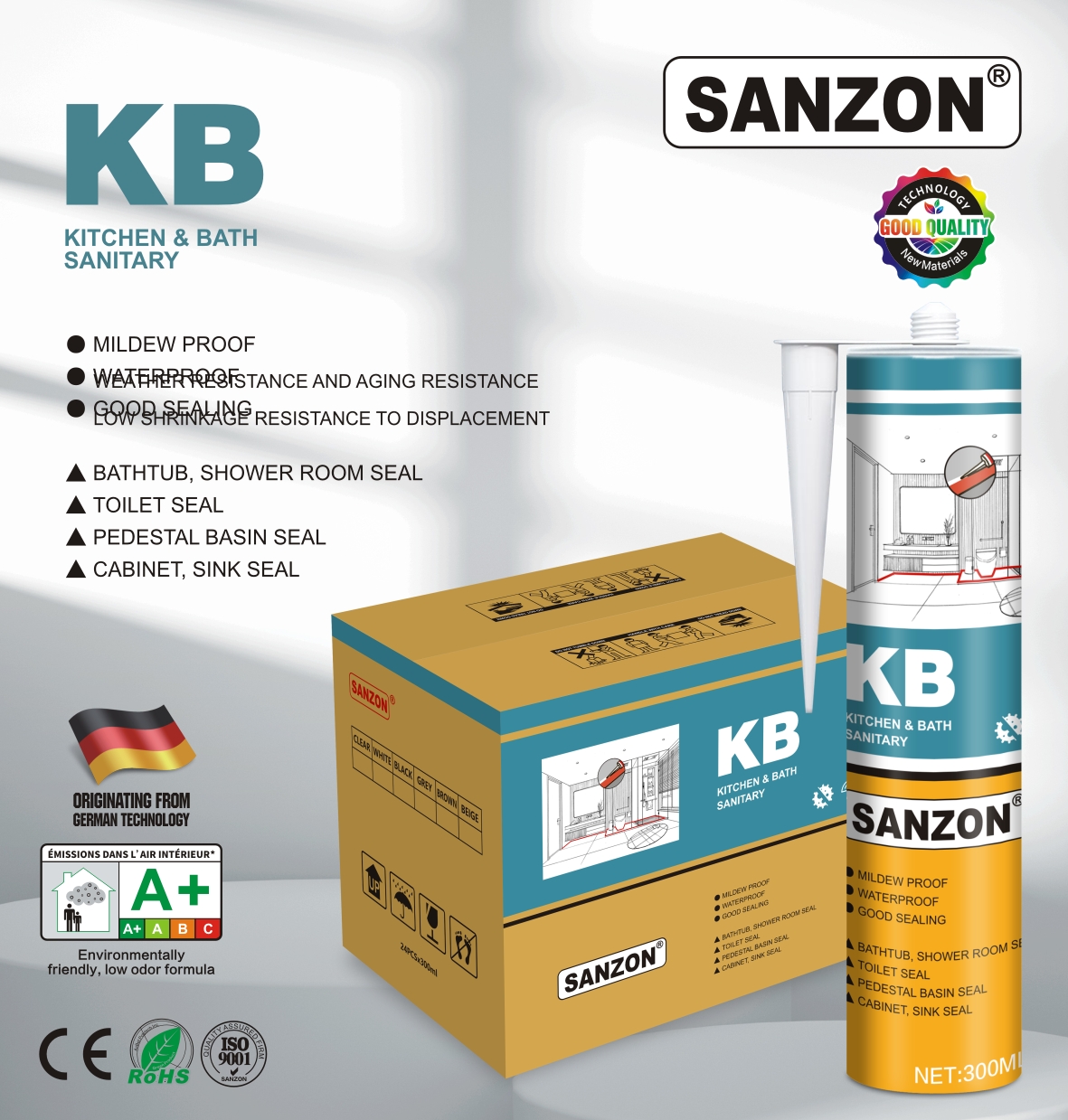
Sanitary claims are the most frequently over-read, because almost every range brochure contains the phrase "anti-mildew". The document that answers the claim names the sanitary model and states the performance conditions. SANZON KB is a neutral-cure kitchen and bathroom sanitary anti-mold silicone sealant with long-term anti-mold performance in high temperature and humidity, a usage temperature range of -50°C to 150°C, 300 ml × 24 pcs per carton packing and a 12-month shelf life. The scope statement also records KB as covered by the EU-market RoHS certification. Neither of those documents establishes anti-mold performance on a specific tiled substrate in a specific bathroom — that is a different question, and it belongs to the project, not the certificate file.
Firestop
Firestop is the category where level confusion causes the most expensive errors, because the vocabulary is similar and the evidence is not. The SANZON product range describes fire-resistant sealants as fire-rated sealing with expansion performance, positioned to help pass building inspections and meet fire-safety compliance. That is a range-level description. The specific document that would answer a firestop claim is performance evidence issued for the named product and the actual joint or penetration configuration. It matters that a RoHS scope statement names SANZON FS for the EU market, but that statement is about restricted substances, not about fire classification, and it should never be filed as fire evidence.
Structural
Structural claims put the sealant inside the joint design, so the evidence has to follow it there. SANZON CS is a structural silicone sealant documented with CE, ISO and RoHS certification and a French indoor air emission label of A+, and it is described as UV resistant with a formula without white oil. Those are product-level and market-level facts. The next questions in a structural evaluation are project questions: which substrates were included in any adhesion or compatibility testing, what joint dimensions the design assumes, and whether the document set speaks to that assembly. A certificate that does not name the assembly has not evaluated it.
Claim-to-evidence comparison table
The table below maps the five claim categories to the evidence that actually answers them, the documents that do not, and the SANZON reference a buyer would check. It is a reading aid, not a certificate register: the scope text on the actual document always controls.
| Claim category | Evidence that answers the claim | Documents that do not answer it | SANZON reference to check |
|---|---|---|---|
| General purpose acid-cure | Product-level statement naming the acetoxy grade, plus market documents issued for that model | Company ISO 9001 certificate; RoHS report scoped to another chemistry | SANZON PA acetoxy sealant (300 ml, 24 pcs/carton; CE, ISO 9001, RoHS, French A+ label); general purpose model SANZON GP named in the EU RoHS scope |
| Neutral cure / weatherproof exterior | Model data sheet stating neutral curing, temperature range and durability positioning, with the model named in market documents | An acid-cure grade's certificate; generic "weatherproof" brochure wording | SANZON GP-N (-50°C to 150°C, 300 ml × 24 pcs, 12-month shelf life); SANZON NS (-50°C to 150°C, 300 ml × 24 pcs or 590 ml × 20 pcs, exterior wall suitability); CLASSIC/ELEPHANT/LIONKING 300 ml neutral alcohol release, 18 Shore A, 12.5% movement capability (ISO 11600) |
| Mildew-resistant sanitary | Model data sheet naming the sanitary grade and the humidity/temperature conditions, plus market scope for that model | Range brochure claim; a certificate for a different model in the same family | SANZON KB neutral-cure sanitary anti-mold sealant (-50°C to 150°C, 300 ml × 24 pcs, 12-month shelf life, EU RoHS scope) |
| Firestop | Fire performance evidence issued for the named product and the actual joint or penetration configuration | RoHS scope line naming the firestop model; catalogue "fire-resistant" wording | SANZON FS firestop silicone sealant — RoHS scope names FS for the EU market only |
| Structural | Product-level declaration plus project-level adhesion and compatibility evidence for the substrates and joint design used | CE listing on its own; company system certificate | SANZON CS structural silicone sealant (CE, ISO, RoHS, French A+ label; UV resistant, formula without white oil) |
Reading limits honestly
Three habits keep a compliance file credible. First, a document that is missing is a request, not a conclusion: "not disclosed" never means "not capable", and a supplier should be asked for the model-specific document before a specification decision is made. Second, sample-scope language deserves respect — a report marked as covering only the tested sample tells you what was tested, not what ships every week, so ask how production is controlled (SANZON states 100% test as its quality-control method) rather than stretching the report. Third, separate product evidence from project evidence: certificates describe a product and a market, while adhesion to your actual substrate, joint movement and site conditions are project variables that a certificate cannot settle for you.
It is also worth resisting the reverse error of assuming that a long validity date or a well-known issuer broadens a scope. The CTB verification runs to 2099-03-13 and the RoHS Certificate of Compliance to 2029-03-14; both are still limited to what their scope paragraphs say.
Frequently asked questions
How do I verify claims from EN 15651 silicone sealant manufacturers?
Treat EN 15651 as a document request rather than a supplier attribute. Ask which document in the file names that designation, for which model and which class, and who issued it. A company profile page, an ISO 9001 certificate or a product photograph does not answer a named European product-standard requirement, because none of them states a result for a specific model. SANZON's documented certificate set covers ISO 9001, ISO 14001 and ISO 45001 system certification, CE and RoHS certification for selected export products, SGS performance and safety test reports, and a French indoor air emission label A+ on specific grades such as SANZON PA and SANZON CS. Where a project specification names a European product standard, the correct action is to request the model-specific document for that standard and market before the specification is fixed.
What does a RoHS certificate actually cover on a silicone sealant data sheet?
It covers restricted substances, for the material and scope stated on the document. Two SANZON examples show why the scope matters more than the heading. The RoHS Certificate of Compliance UNIB24030401HC-01, issued by Shenzhen United Testing Technology for the EU market, cites the IEC 62321 series and compliance with RoHS 2011/65/EU and (EU) 2015/863, and states its scope as Polyurethane Sealant. The CTB Verification of Conformity CTB240305020CX-ZS cites the IEC 62321 series together with EU RoHS Directive 2011/65/EU and is scoped to silicone sealant, with the limitation "Only for tested sample". Neither document is a low-VOC statement or an indoor air quality statement; the French A+ label is a separate item held by specific grades.
Does the German packaging EPR registration mean the sealant itself is approved for the German market?
No. It is a packaging producer-responsibility registration. The registration DE2636557090139 is issued by Stiftung Zentrale Stelle Verpackungsregister (LUCID) for the DE market under VerpackG, is valid from 2025-03-19 to 2099-03-19 and is scoped to good-filled sales packaging. It confirms that packaging obligations are registered; it says nothing about sealant performance, cure chemistry or construction suitability. A German project reviewer will want the product-level and performance-level documents as well.
Do I need different documents for acid-cure, neutral, sanitary, firestop and structural sealants?
Yes, because each category asks a different question. Acid-cure and neutral claims are answered by a model data sheet naming the chemistry, plus market documents scoped to that model. Sanitary claims need a model data sheet stating the anti-mold position and the humidity and temperature conditions. Firestop claims need performance evidence for the named product and the actual joint or penetration configuration. Structural claims need product-level declaration plus project-level adhesion and compatibility evidence for the substrates in the design. One certificate covers one scope, so a single document rarely answers more than one of these categories.
Do certification requirements change MOQ, cost or lead time?
They change the sequence, not just the paperwork. SANZON's standard commercial terms are a MOQ of 100 boxes, a lead time of 10-20 days, OEM/ODM customization of packaging and logo, and 100% test as the quality-control method. A document that does not already exist for a specific model and market cannot be produced at the loading dock, so scope questions are best settled before the order is placed: confirm the model designation, the market and the claim in writing, then check which documents already exist for that combination. Resolving this first is what protects the lead time.
Can we get samples and the matching certificate set before ordering?
Yes. SANZON offers free samples and technical product selection consultation, plus remote technical support, and buyers can request free sample testing as part of evaluation. The practical way to use a sample is to pair it with documents: send the claim sentence, the target market and the model designation, ask for the documents that are scoped to that model, and test the sample against the joint conditions you actually have. Read any report marked as sample-scope as evidence about the sample, and ask separately how production is controlled. A single message containing the claim, the model and the market gets a usable answer; a request for "all certificates" usually gets a folder nobody can match to a product.
Conclusion: a three-line rule for the procurement file
Reading regional certificates against product claims comes down to three lines per claim. Line one is the claim itself, written with chemistry, function, application, format and market. Line two is the document whose scope, product designation, standard class and market line actually cover that claim. Line three is the date and the market on that document. If any of the three lines is missing, the claim is unverified — not disproved, and not approved.
Applied to the SANZON range, that discipline is what separates a general purpose acid-cure claim documented through SANZON PA from a neutral-cure claim documented through SANZON GP-N or SANZON NS, a sanitary claim documented through SANZON KB, a firestop claim that needs performance evidence beyond a RoHS scope line naming SANZON FS, and a structural claim documented through SANZON CS plus project-level adhesion evidence. The documents exist at different levels because the claims exist at different levels. Matching them is the work.
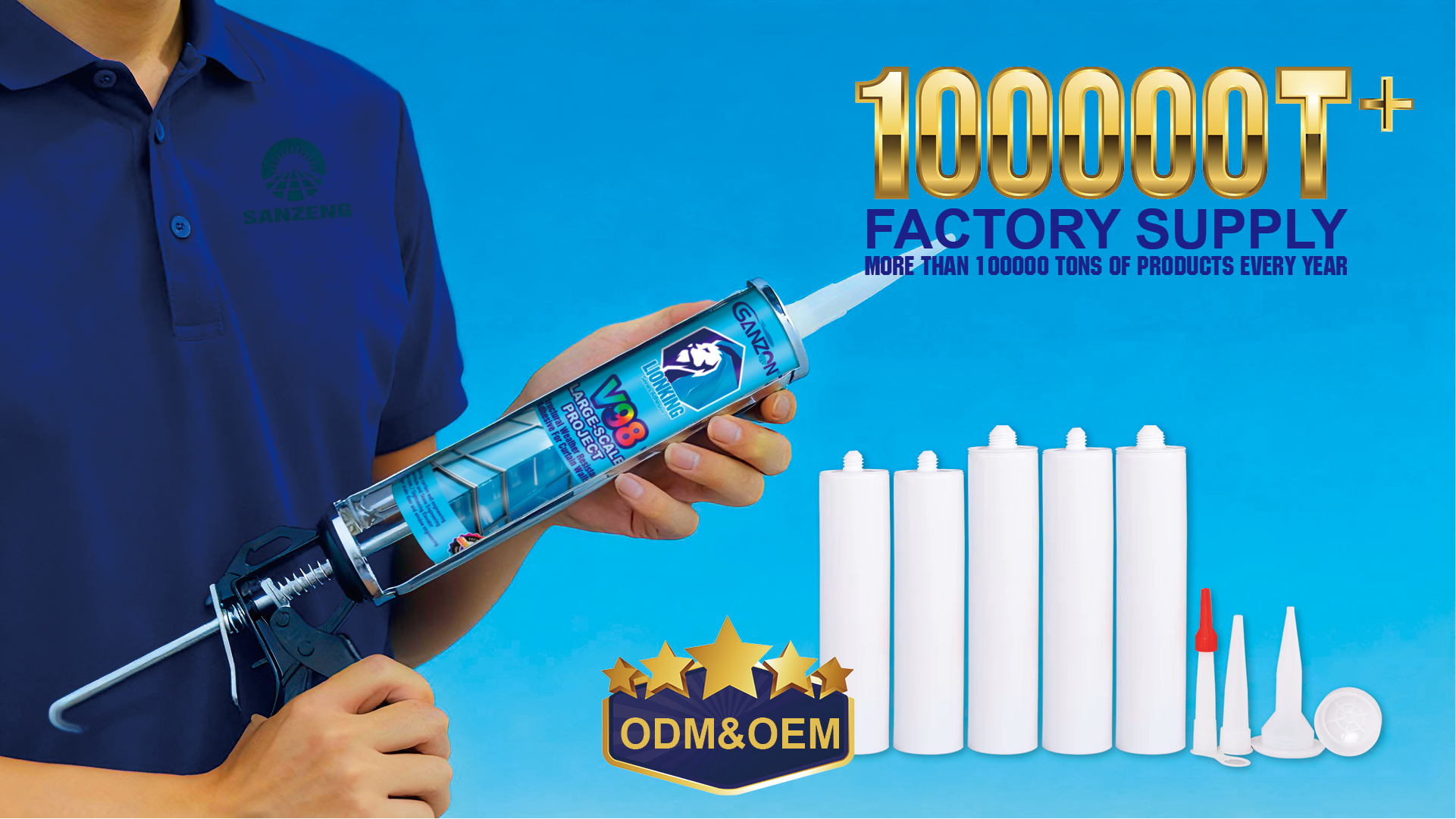
For a consolidated view of the SANZON adhesive and sealant series, the SANZON LIONKING Series Adhesives single-page brochure can be downloaded and reviewed alongside the model-specific certificates, so the product designation in the brochure and the scope line in the certificate are read together rather than separately.
Have Questions or Need More Details?
Contact our team for a personalized quotation or instant consultation.
Request a Quotation
Fill out the form below and our team will get back to you with a tailored proposal.
WhatsApp Direct Chat
Prefer to chat in real-time? Message us on WhatsApp for instant assistance & quick answers.
- Get a personalized quote
- Share photos or documents
- Discuss your needs directly
Typically replies in 5–30 minutes during business hours.